

Conveyor Belt Splicing Project at AMMAN
PIL has strong resource integration capabilities, encompassing market development, design, investment, project management, and equipment supply networks. In the PT AMNT expansion project, PIL serves as the erection contractor under PT MCC15 Engineering and Construction.
Problem Summary
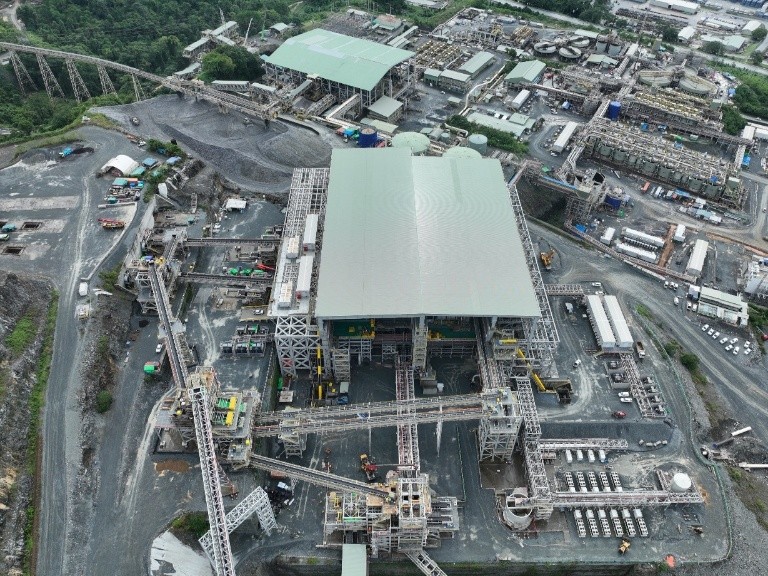
Since 2023, PT Amman Mineral Internasional Tbk (AMMN) has been running a large-scale expansion program from upstream to downstream operations. PT Amman Mineral Nusa Tenggara (AMNT), an AMMN subsidiary operating the Batu Hijau open-pit mine in Sumbawa, is targeting an increase in processing plant capacity from 35 million tons of ore per year to 85 million tons of ore per year.
This target supports production from Phase 8 of Batu Hijau, projected to operate through 2030, as well as the integration of the Elang project. Part of this expansion also includes the construction of a copper smelter and Precious Metal Refinery (PMR) in West Sumbawa Regency, carried out by PT Amman Mineral Industri (AMIN)
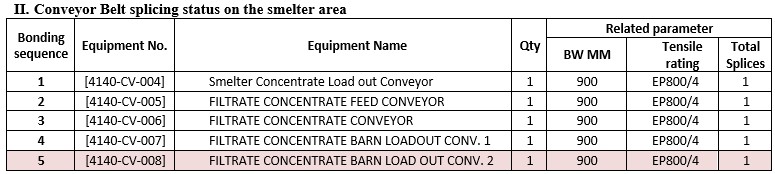
The expansion involves the addition of at least 26 new conveyor units at the processing plant and 5 conveyor lines at the smelter area to support the expansion of the concentrate warehouse.
Drawing on PT Suprabakti Mandiri’s experience in conveyor belt installation, PT PIL, as the erection contractor under PT MCC15 Engineering and Construction, appointed PT Suprabakti Mandiri to carry out conveyor belt splicing works.
Project Execution
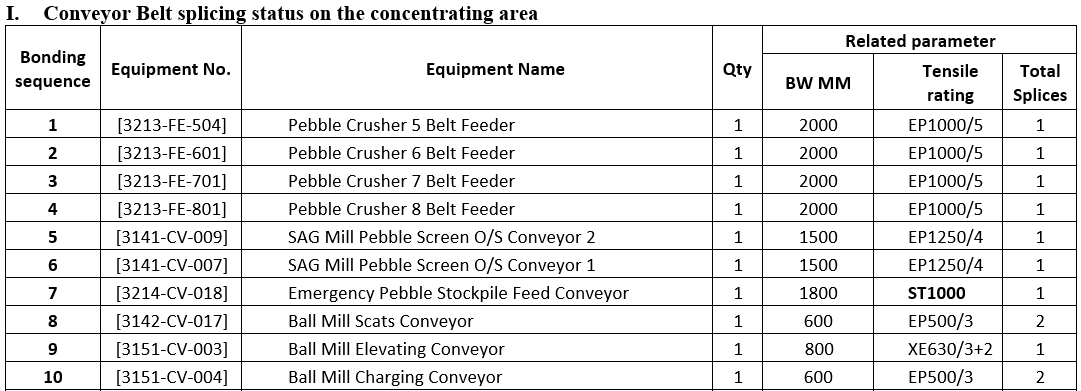
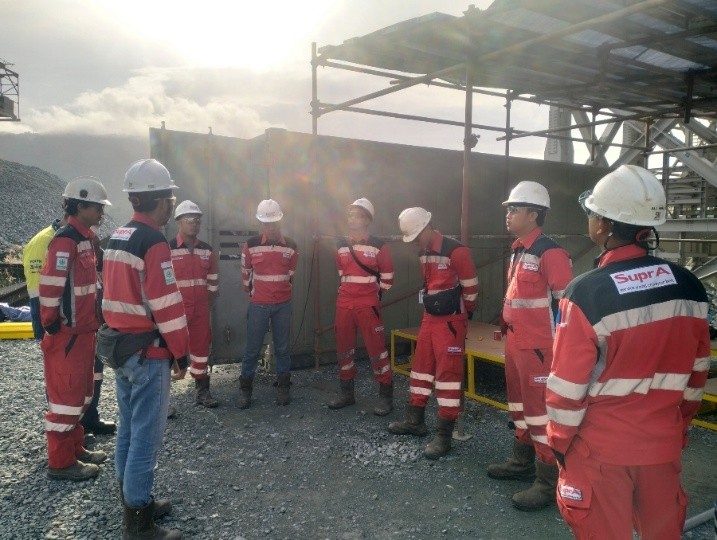
The scope of work covers 30 conveyor systems with 35 splices. Belt specifications vary from 600mm to 2,000mm in width. To accommodate this variation, PT Suprabakti Mandiri prepared 3 sets of vulcanizing machines in different sizes, 2 splicing tables, and 8 pairs of edge bars.
At the smelter area, belt specifications are uniform, so only 1 set of vulcanizing machine was required. Splicing materials used include Rema Tip Top for fabric belts and Continental for steel cord belts. For side wall re-application on bucket conveyor belts, the team used SC2000 cement with a cold bonding system.
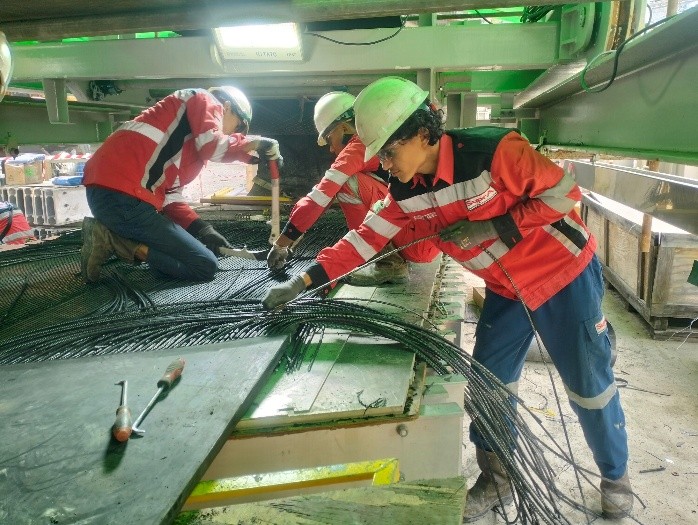
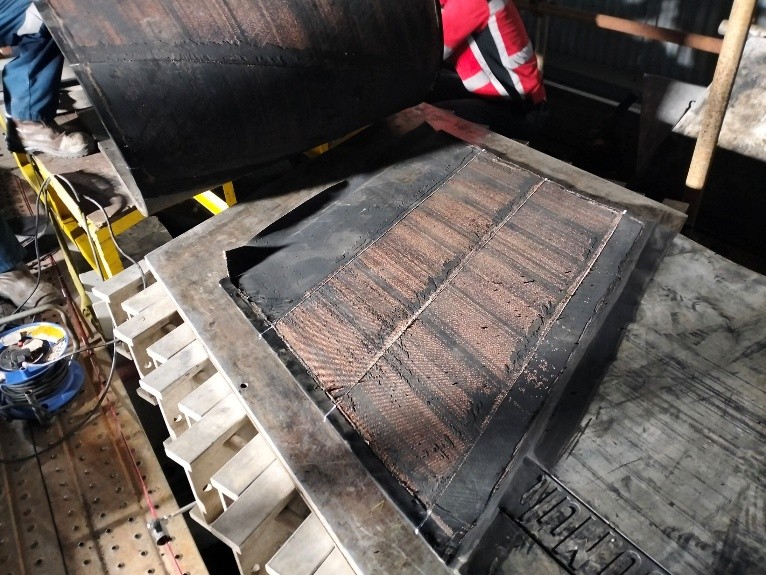
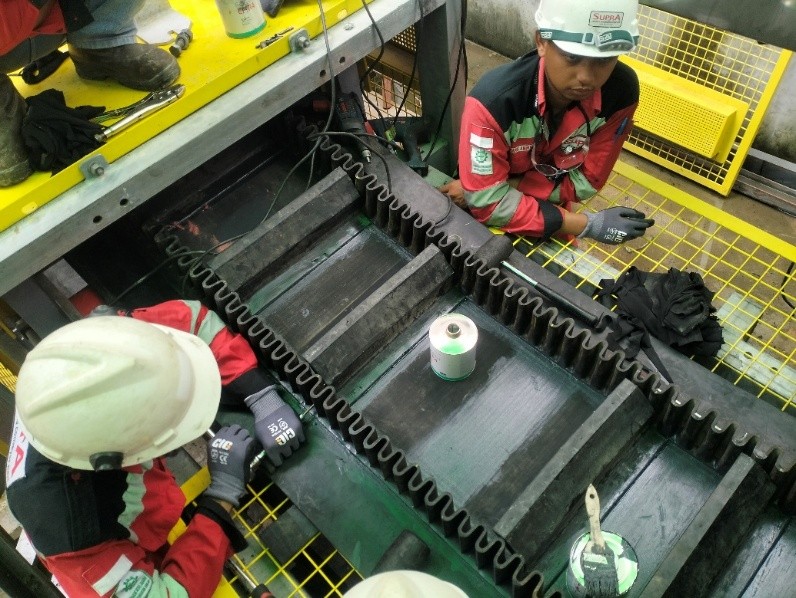
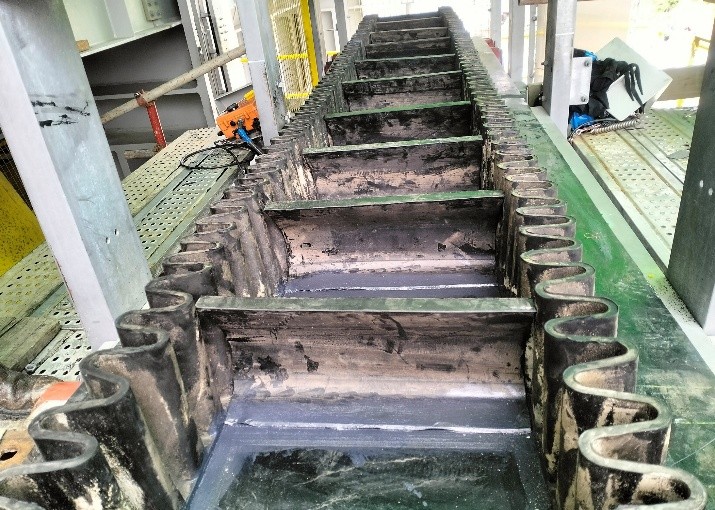
The work ran in parallel with the belt pulling process carried out by PT PIL. As PT Suprabakti Mandiri completed splicing on one conveyor, PT PIL proceeded to pull the belt on the next. Each conveyor typically used one belt roll, with some requiring two.
Verbal coordination and daily reports were essential to prepare each stage, particularly in managing the use of lifting equipment and transportation. Moving equipment between conveyors was a challenge in itself, as conveyor locations were not always adjacent, and some were located indoors with limited access for handling equipment.
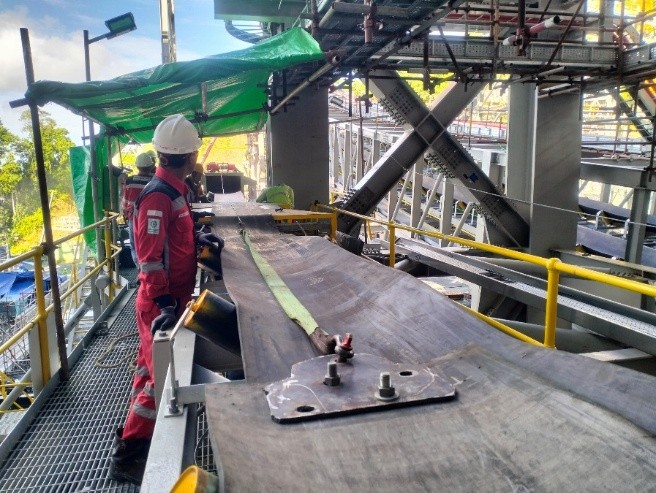
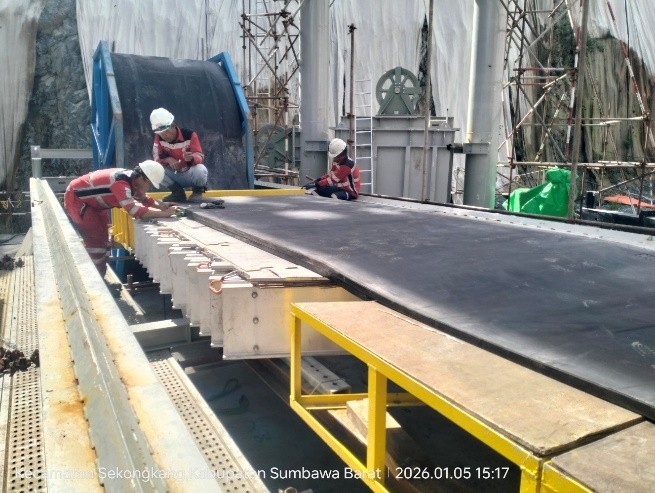
Conveyor Belt Splicing Process
The first step is preparing both belt ends and aligning their positions. The team marked 3 centerlines on the belt to verify belt alignment, then marked the belt according to the required drawing before cutting. For fabric belts, the team stripped the cover rubber and prepared both the top and bottom belt surfaces.
Once all surfaces were clean, splicing material then applied and belt ends were joined. For steel cord belts, stripping was carried out until the cords were fully exposed, the cords were carefully cleaned, then arranged according to procedure before splicing material was applied.
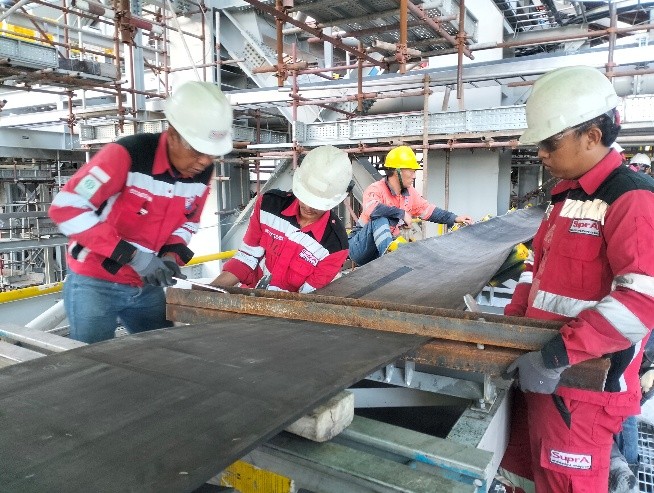
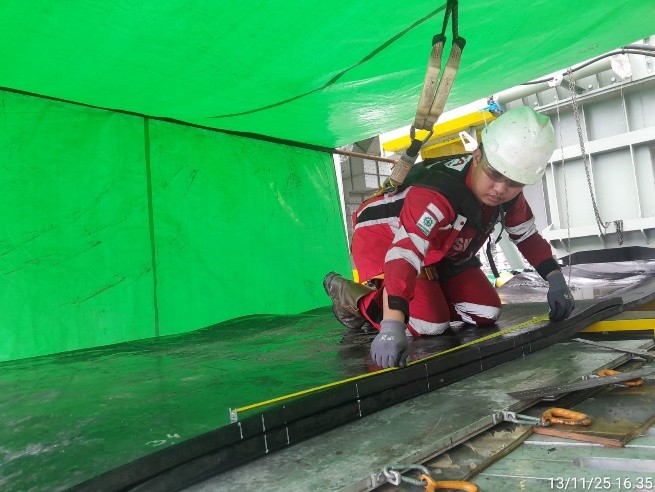
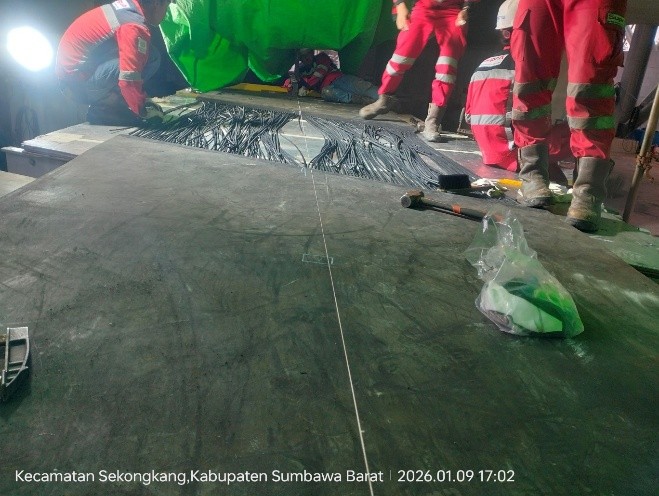
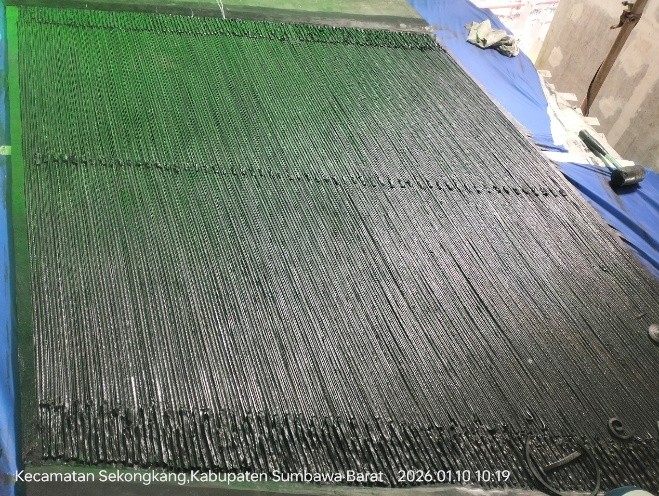
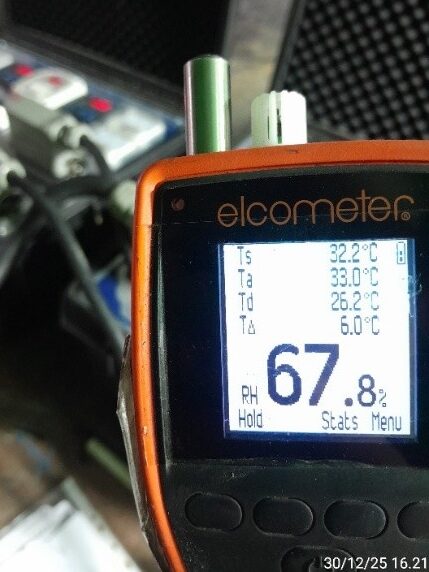
Every stage was monitored by the QA/QC team to ensure all processes complied with the Inspection Test Plan (ITP), covering centerline alignment, splice length measurement, and humidity monitoring, which must remain below 75%.
The next stage was the vulcanization process. Before starting, the team inspected all equipment including the heating platens, control box, pressure bag, and pressure pump. Thermocouples were attached to each platen and edge bar on both sides of the belt splice.
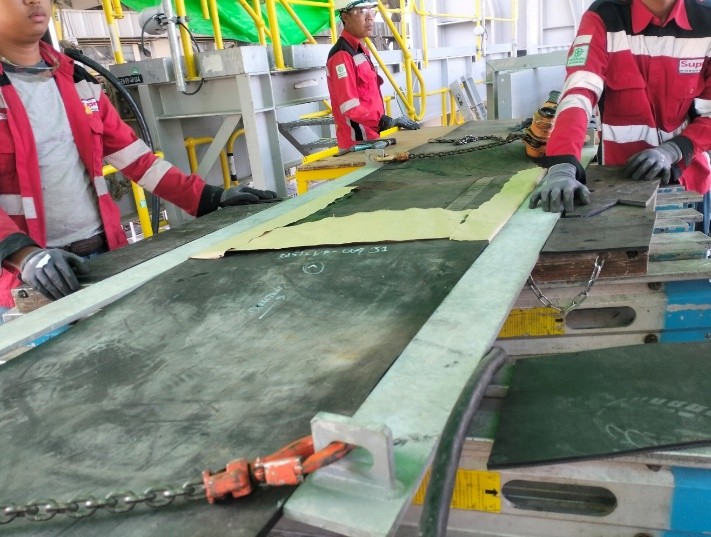
The entire vulcanizing machine assembly was set up and edge bars were tightened using chain hoists. Temperature was measured across all platen zones every 5 minutes from the moment power was applied to the heating platens. Pressure was also checked and recorded at regular intervals.
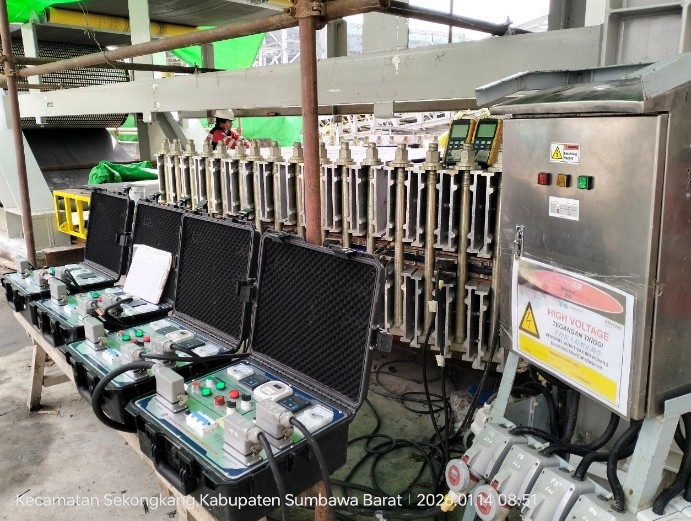
Once vulcanization was complete, the platens were cooled with water at room temperature until the specified cooling temperature was reached. After cooling, the top press assembly and platens were removed, and the team inspected belt and splice alignment to ensure they were perpendicular. Trimmed edges were polished smooth, and splice data was measured and recorded in accordance with QA requirements.
Final Inspection
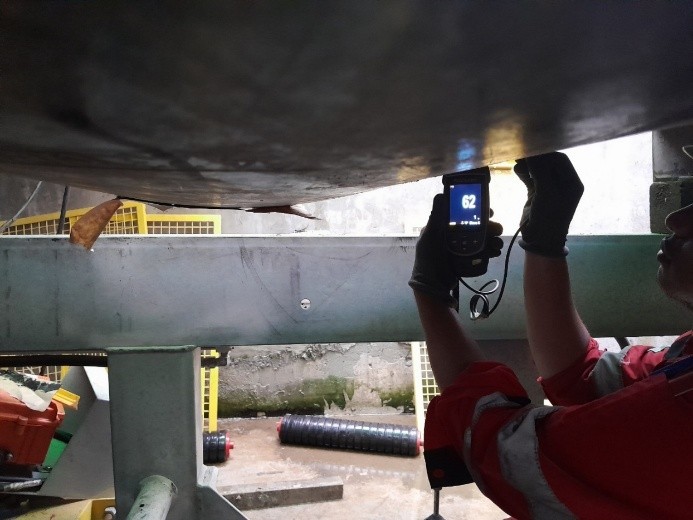
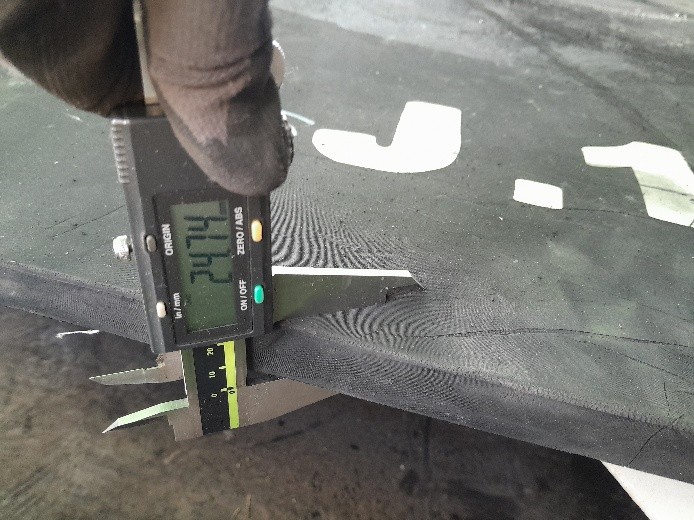
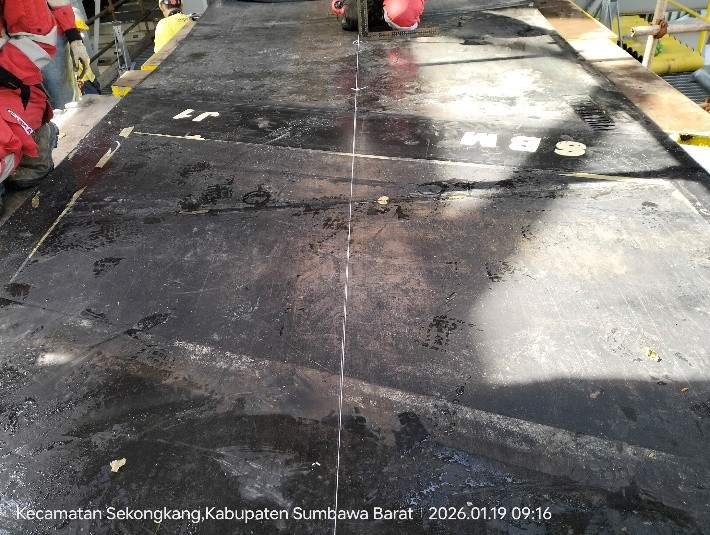
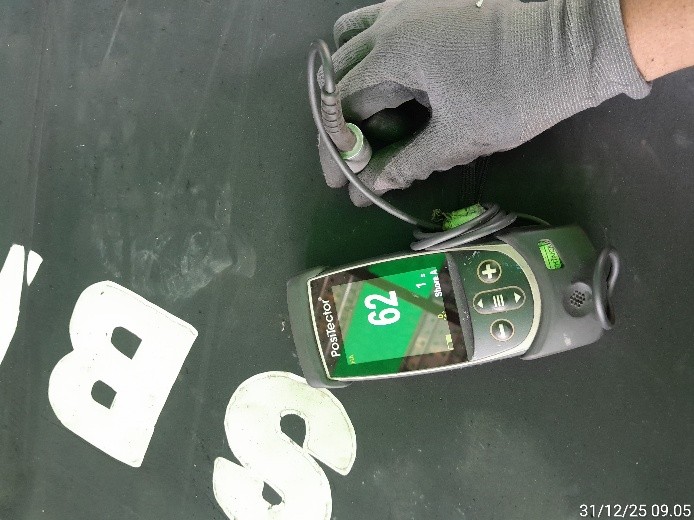
Quality inspections were carried out throughout the entire splicing process. This cover belt preparation inspection, splicing material verification, vulcanization temperature and pressure monitoring, visual inspection of completed splices, and final splice integrity checks including hardness testing and thickness measurement. All work was completed in accordance with the procedures and technical standards recommended by the manufacturer.
Project Outcomes
PT Suprabakti Mandiri completed conveyor belt splicing on 26 conveyors at the processing plant area (31 splices) by January 17, 2026, on schedule. Work at the smelter area was also completed within the same period, covering 4 out of 5 targeted conveyor lines.
One conveyor (4140-CV-008) remains outstanding as its construction was not yet complete at the time of project execution. The project was completed without any safety incidents, totaling 7,584 manhours with zero LTI, near misses, or fatalities.
Constraints
A tight schedule was the primary challenge throughout the project. Coordination between all parties had to be managed closely to prevent splicing work from being delayed due to late belt pulling or area readiness.
Conveyor locations that were not always adjacent, combined with limited access for handling equipment inside buildings, made equipment relocation between conveyors difficult. Belt conditions that were not yet fully tensioned at certain points also temporarily hindered the splicing process.
About the Client
PT Pengembangan Industri Logam (PIL) is an international contracting company specializing in non-ferrous metal projects, covering engineering, consultancy, equipment supply and installation, technical services, commissioning, and personnel training.
| Location | Batu Hijau, Sumbawa, West Nusa Tenggara |
|---|---|
| Product/Service | Rema Tip Top & Continental |