
Corrosion Protection Solution
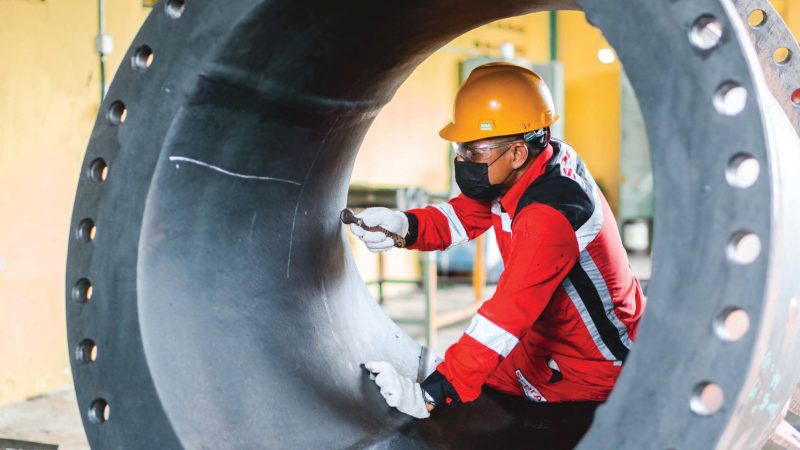
Rubber Lining Solution
Protection Against Corrosion and Chemical Attack
Corrosion and chemical degradation threaten industrial assets. They cause leaks, contamination, and expensive maintenance. Effective protection needs durable materials for lasting resistance against aggressive environments.
PT Suprabakti Mandiri, an ISO-certified (SGS ISO 9001:2008) provider, delivers advanced rubber lining systems that protect equipment operating under severe chemical and mechanical conditions. We partner with REMA TIP TOP to bring the Chemoline and Chemonit rubber linings. These products provide chemical resistance, mechanical strength, and thermal durability.
Rubber linings are available in soft and hard formulations to suit different equipment requirements. Soft rubber linings are highly flexible and ideal for components with lower mechanical stability, classified as “soft” after complete vulcanization.
Hard rubber linings, on the other hand, are used for mechanically stable structures, typically made from natural rubber (NR) or blends with polyisoprene (IR) or styrene-butadiene rubber (SBR).
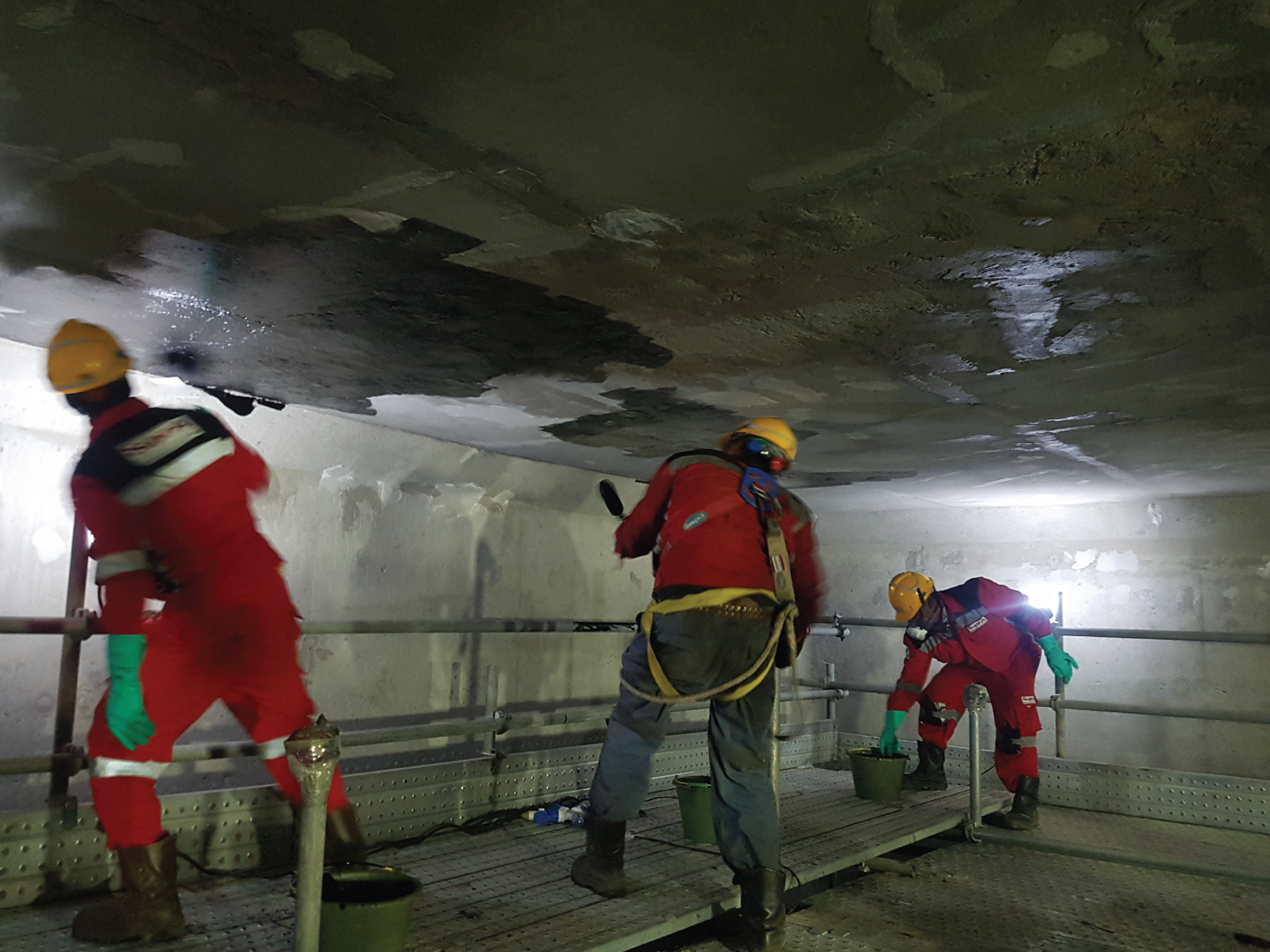
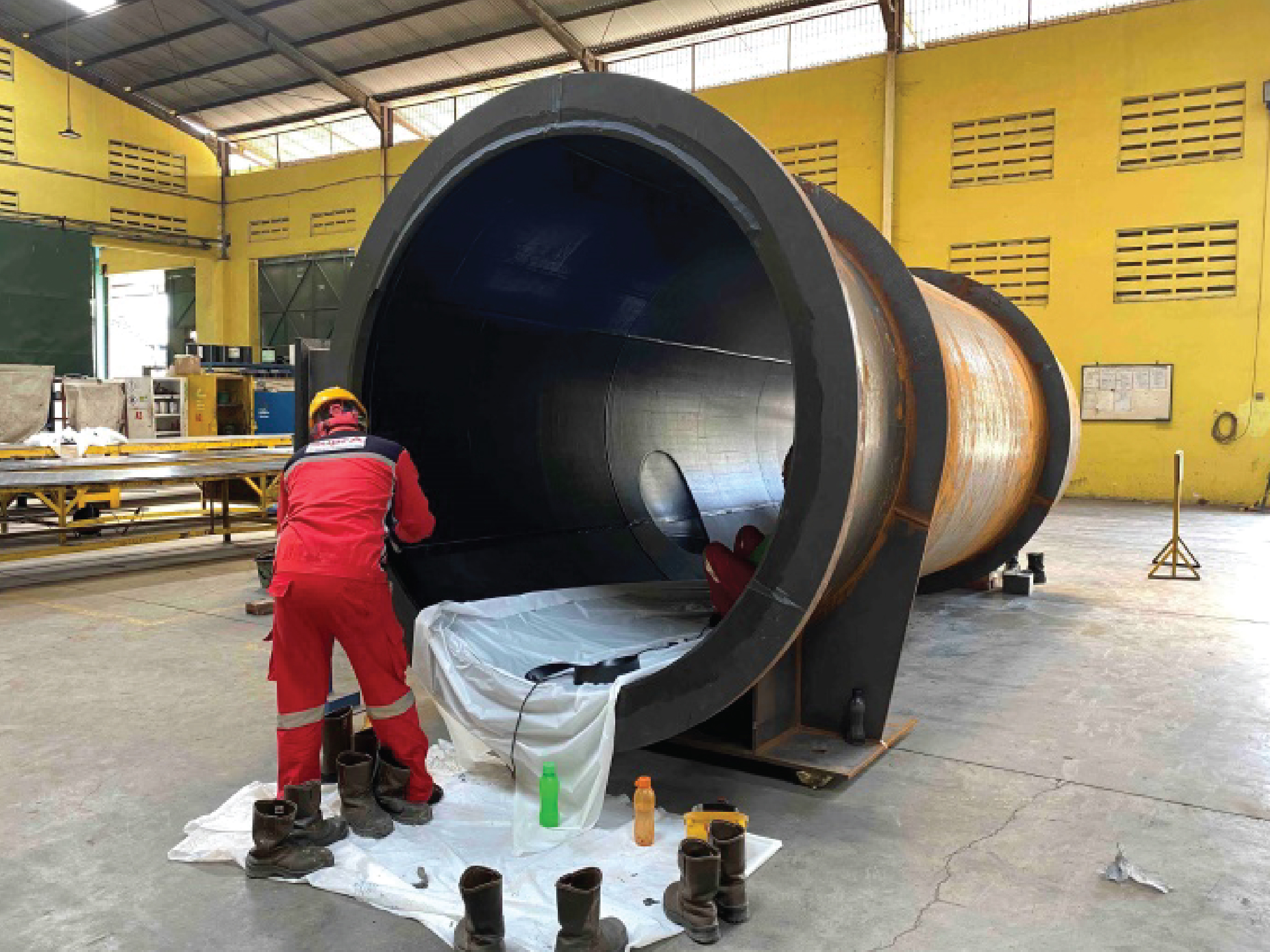
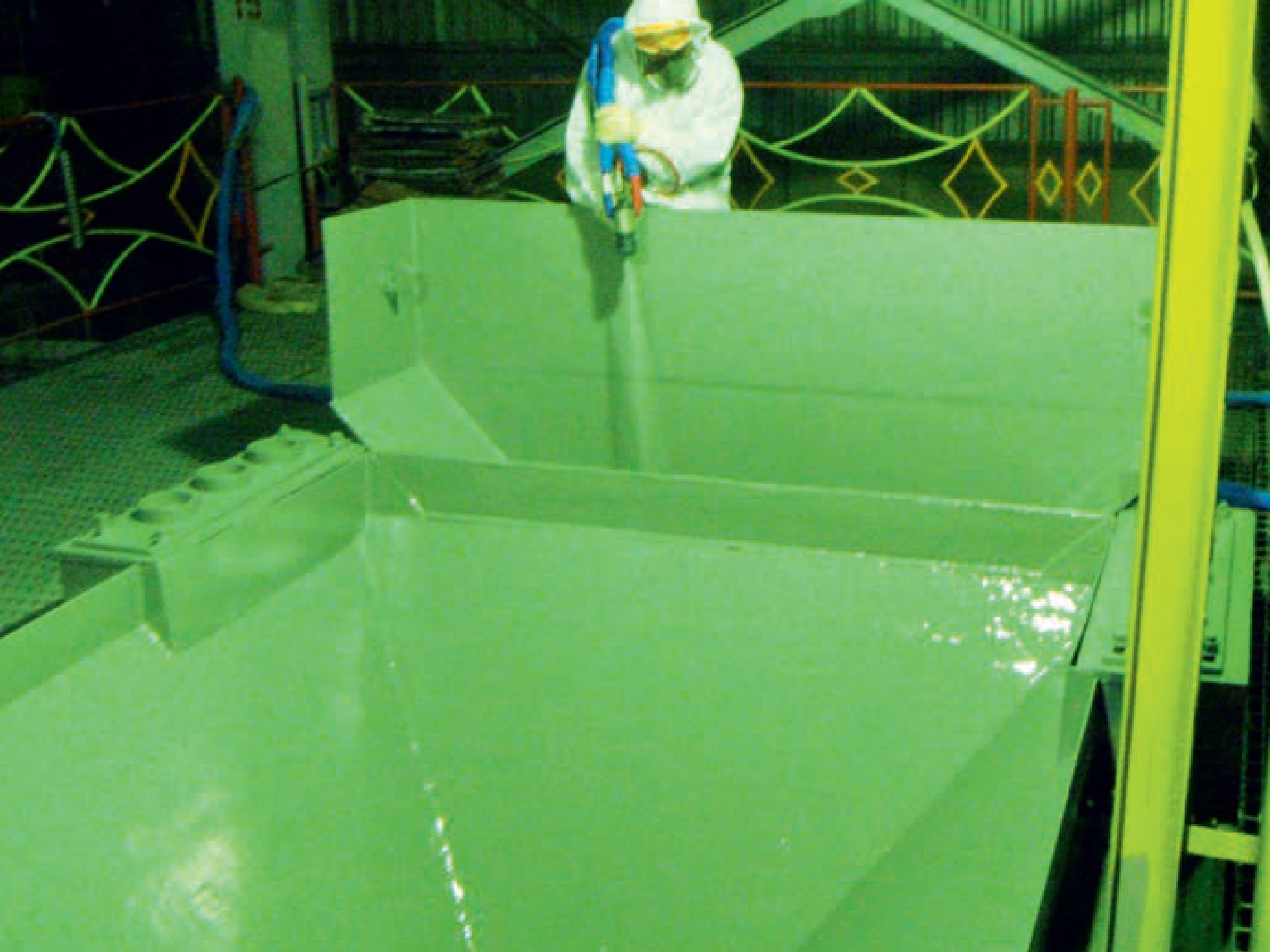
These linings create a seamless, impermeable barrier for tanks, pipelines, scrubbers, FGD units, and reactors. They ensure lasting structural integrity and reliable corrosion protection in demanding industrial environments.
Chemoline Soft Rubber Lining (pre-vulcanized)
Pre-cured Rubber Lining for Quick Installation
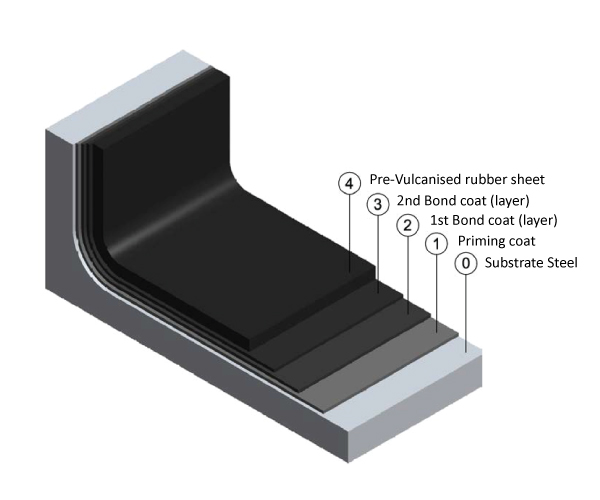
Chemoline CN Series pre-vulcanized rubber linings are engineered for fast, high-quality corrosion protection across a wide range of chemical and environmental applications. These linings are factory-cured, ensuring consistent mechanical properties and reduced installation time, making them ideal for maintenance and refurbishment projects.
Produced through vacuum extrusion, Chemoline CN features a dense, non-porous structure that gives excellent resistance to acids, alkalis, and industrial process media. Its integrated CN bonding layer ensures strong adhesion to both steel and concrete substrates, using REMA TIP TOP’s BC 3000 or BC 3004 cold-curing adhesive systems.
With German DIBt certification (§19 WHG) for handling water-hazardous substances, Chemoline CN is widely applied in Chemical and wastewater storage tanks, Gas scrubbers and absorbers, Flue gas treatment systems, Clarifiers, and pipelines. This pre-vulcanized lining system combines chemical, mechanical, and thermal resilience for reliable long-term protection with minimal maintenance.
Chemoline Soft Rubber Lining (unvulcanized)
Adaptable Rubber Lining for High-Temperature Protection
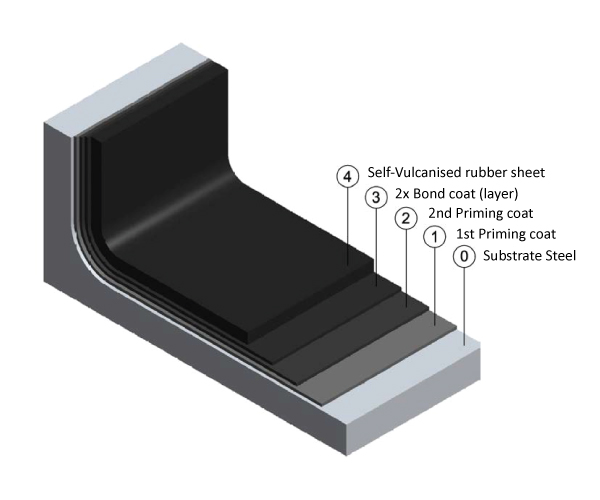
For more demanding applications, unvulcanized Chemoline provides superior adaptability for on-site installation or large equipment linings. These soft rubber linings are applied in an uncured state and then vulcanized either in an autoclave or at ambient temperature, depending on site conditions.
Utilizing the TC 5000 Series vulcanizing bonding systems, unvulcanized Chemoline delivers excellent bond strength and chemical resistance even at continuous operating temperatures up to 120°C.
Ideal for large process vessels, reactors, ducts, and chemical storage units, this system offers exceptional resistance to acids, alkalis, and high-temperature media. Certified under German DIBt (§19 WHG), Chemoline unvulcanized linings ensure the highest level of protection for critical assets in the chemical, fertilizer, and power industries.
Chemonit Hard Rubber Lining
Rigid Rubber Lining for Extreme Resistance.
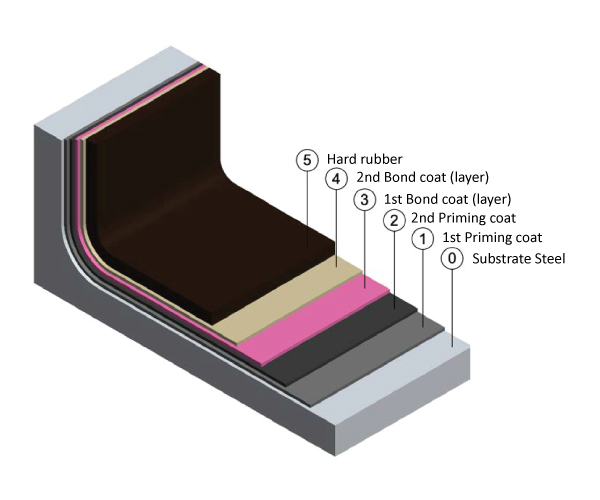
Chemonit Hard Rubber Lining Systems are designed for heavy-duty corrosion environments where high chemical resistance and mechanical strength are required. Composed of advanced natural and synthetic rubbers, Chemonit linings are applied in an unvulcanized state and subsequently cured in an autoclave to achieve an extremely hard, dense surface.
Operating safely at temperatures up to 100°C, Chemonit linings resist strong acids, alkalis, and process fluids. Their rigidity and toughness make them ideal for applications exposed to chemical attack, pressure, and physical impact.
Typical applications include absorbers, condensers, and pickling tanks, heat exchangers, and leaching reactors, and flue gas treatment systems. Just like Chemoline, Chemonit systems are German DIBt-approved for use with water-hazardous substances, ensuring operational safety and compliance with international standards.
Rema TipTop Repair System
Repair Solution for Restoring Rubber Lining
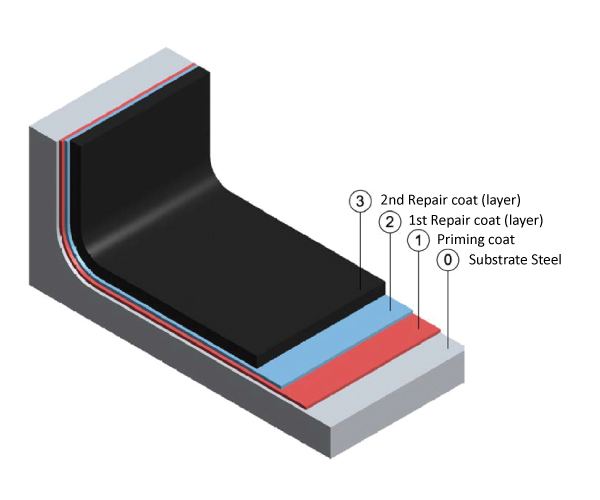
The Rema TipTop Repair System provides a fast, durable solution for maintaining and restoring rubber linings damaged by impact, wear, or chemical degradation. Using high-performance epoxy and vinyl ester resins as well as synthetic rubber compounds, the system enables on-site repair without full relining.
Depending on the application, Suprabakti supplies:
- Soft Rubber Repair Kits for Chemoline linings
- Chemonit Hard Rubber Repair Pastes for hard rubber systems
In addition, specialized products are available for steel restoration and concrete surface pre-treatment. Packaged in two-component kits, these repair systems are easy to apply and ensure rapid turnaround, helping facilities minimize downtime and maintain full corrosion protection.
Rubber Lining Solution
Protection Against Corrosion and Chemical Attack
Corrosion and chemical degradation threaten industrial assets. They cause leaks, contamination, and expensive maintenance. Effective protection needs durable materials for lasting resistance against aggressive environments.
PT Suprabakti Mandiri, an ISO-certified (SGS ISO 9001:2008) provider, delivers advanced rubber lining systems that protect equipment operating under severe chemical and mechanical conditions. We partner with REMA TIP TOP to bring the Chemoline and Chemonit rubber linings. These products provide chemical resistance, mechanical strength, and thermal durability.
Rubber linings are available in soft and hard formulations to suit different equipment requirements. Soft rubber linings are highly flexible and ideal for components with lower mechanical stability, classified as “soft” after complete vulcanization.
Hard rubber linings, on the other hand, are used for mechanically stable structures, typically made from natural rubber (NR) or blends with polyisoprene (IR) or styrene-butadiene rubber (SBR).
These linings create a seamless, impermeable barrier for tanks, pipelines, scrubbers, FGD units, and reactors. They ensure lasting structural integrity and reliable corrosion protection in demanding industrial environments.
Chemoline Soft Rubber Lining (pre-vulcanized)
Pre-cured Rubber Lining for Quick Installation
Chemoline CN Series pre-vulcanized rubber linings are engineered for fast, high-quality corrosion protection across a wide range of chemical and environmental applications. These linings are factory-cured, ensuring consistent mechanical properties and reduced installation time, making them ideal for maintenance and refurbishment projects.
Produced through vacuum extrusion, Chemoline CN features a dense, non-porous structure that gives excellent resistance to acids, alkalis, and industrial process media. Its integrated CN bonding layer ensures strong adhesion to both steel and concrete substrates, using REMA TIP TOP’s BC 3000 or BC 3004 cold-curing adhesive systems.
With German DIBt certification (§19 WHG) for handling water-hazardous substances, Chemoline CN is widely applied in Chemical and wastewater storage tanks, Gas scrubbers and absorbers, Flue gas treatment systems, Clarifiers, and pipelines. This pre-vulcanized lining system combines chemical, mechanical, and thermal resilience for reliable long-term protection with minimal maintenance.
Chemoline Soft Rubber Lining (unvulcanized)
Adaptable Rubber Lining for High-Temperature Protection
For more demanding applications, unvulcanized Chemoline provides superior adaptability for on-site installation or large equipment linings. These soft rubber linings are applied in an uncured state and then vulcanized either in an autoclave or at ambient temperature, depending on site conditions.
Utilizing the TC 5000 Series vulcanizing bonding systems, unvulcanized Chemoline delivers excellent bond strength and chemical resistance even at continuous operating temperatures up to 120°C.
Ideal for large process vessels, reactors, ducts, and chemical storage units, this system offers exceptional resistance to acids, alkalis, and high-temperature media. Certified under German DIBt (§19 WHG), Chemoline unvulcanized linings ensure the highest level of protection for critical assets in the chemical, fertilizer, and power industries.
Chemonit Hard Rubber Lining
Rigid Rubber Lining for Extreme Resistance.
Chemonit Hard Rubber Lining Systems are designed for heavy-duty corrosion environments where high chemical resistance and mechanical strength are required. Composed of advanced natural and synthetic rubbers, Chemonit linings are applied in an unvulcanized state and subsequently cured in an autoclave to achieve an extremely hard, dense surface.
Operating safely at temperatures up to 100°C, Chemonit linings resist strong acids, alkalis, and process fluids. Their rigidity and toughness make them ideal for applications exposed to chemical attack, pressure, and physical impact.
Typical applications include absorbers, condensers, and pickling tanks, heat exchangers, and leaching reactors, and flue gas treatment systems. Just like Chemoline, Chemonit systems are German DIBt-approved for use with water-hazardous substances, ensuring operational safety and compliance with international standards.
Rema TipTop Repair System
Repair Solution for Restoring Rubber Lining
The Rema TipTop Repair System provides a fast, durable solution for maintaining and restoring rubber linings damaged by impact, wear, or chemical degradation. Using high-performance epoxy and vinyl ester resins as well as synthetic rubber compounds, the system enables on-site repair without full relining.
Depending on the application, Suprabakti supplies:
- Soft Rubber Repair Kits for Chemoline linings
- Chemonit Hard Rubber Repair Pastes for hard rubber systems
In addition, specialized products are available for steel restoration and concrete surface pre-treatment. Packaged in two-component kits, these repair systems are easy to apply and ensure rapid turnaround, helping facilities minimize downtime and maintain full corrosion protection.
Coating Solution
Coating Systems for Better Protection
Corrosion remains one of the most persistent threats to industrial assets, gradually weakening metal surfaces, reducing equipment life, and driving up maintenance costs. Effective protection starts with proper surface preparation, not just the coating.
PT Suprabakti Mandiri provides a complete, end-to-end corrosion protection approach through two complementary technologies: Surface Preparation Power Tools from MontiPower® and Polymer Coating Systems from Polylloy®.
This integration ensures every coating application starts with a clean, properly profiled surface. We finish with a durable, high-performance polymer barrier. This barrier withstands chemical, thermal, and mechanical stress.
We apply our coating solutions to steel structures, tanks, pipelines, ducts, and industrial vessels. Suprabakti's coatings provide proven adhesion strength, lasting durability, and extended service life. They perform even in aggressive industrial and marine environments.
A. Surface Preparation Power Tool
Mechanical surface preparation solutions
Surface preparation significantly influences the adhesion strength, durability, and long-term corrosion protection of coatings. MontiPower® offers mechanical surface preparation solutions that achieve blasting-quality results without abrasive grit.
Its Bristle Blasting technology employs high-speed, spring-steel bristles that strike and retract from the surface. This simultaneously removes corrosion, coatings, and mill scale while generating an optimal anchor profile comparable to Sa 2.5–Sa 3 from traditional grit blasting.
The process produces a clean, active surface with micro-indentation patterns that improve coating adhesion and fatigue resistance. It operates safely without dust, sparks, or hazardous residues, making it suitable for onshore, offshore, and subsea applications.
MontiPower systems work where conventional blasting is impractical or restricted, offering consistent surface cleanliness and profile on complex geometries like weld seams, bolts, and edges.
Suprabakti Mandiri, as MontiPower®’s partner in Indonesia, delivers these solutions for industrial, marine, oil and gas, and infrastructure sectors. The tools ensure efficient corrosion removal, reduced preparation time, and improved coating performance across various environments from pipelines and ship hulls to tanks, vessels, and structural steel.
Bristle Blaster® Subsea
Hydraulic Underwater Tool for Subsea Surface Preparation
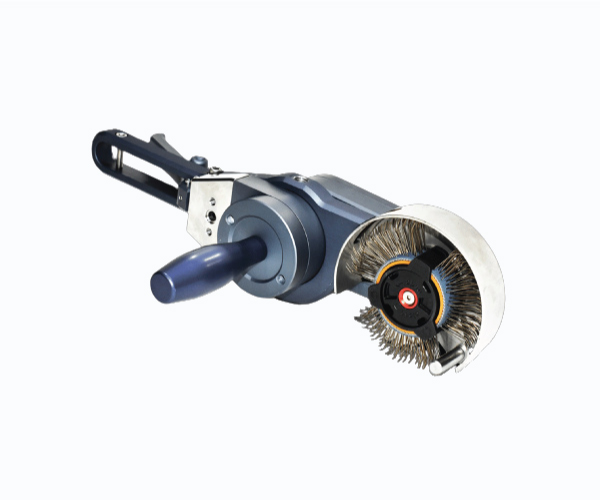
The Bristle Blaster® Subsea is a hydraulically driven underwater surface preparation tool designed for subsea coating, repair, and maintenance operations. Using a unique water-driven motor, it removes corrosion, scale, and coatings while creating a profiled surface suitable for the mechanical bonding of protective materials. The Subsea unit achieves a surface preparation equivalent to Sa 2.5 or Sa 3 with surface roughness up to 50 µm Rz.
The system connects to a power unit via a neutrally buoyant high-pressure hose for a safe and efficient operation without the risk of hydraulic oil leakage. It works for subsea pipeline rehabilitation, ship hull maintenance, and port structure repairs, even in low-visibility or muddy water. Operating depth depends on hose length for up to 200 m as standard, and up to 500 m with upgraded pump configurations.
Bristle Blaster® Ultimate Electric
Electric Surface Preparation Tool For Fast and Grit-Free Corrosion Removal
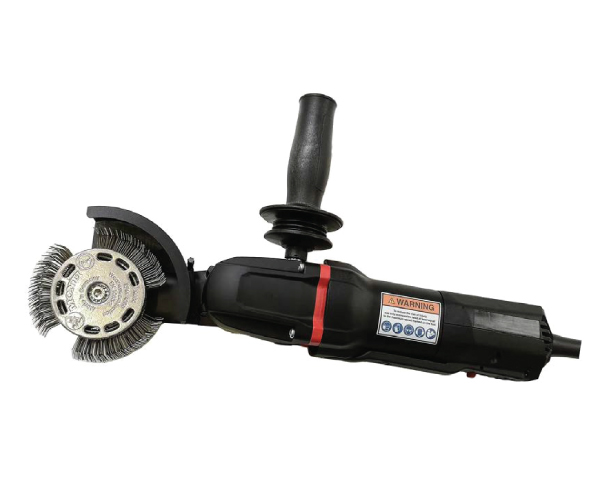
The Bristle Blaster® Ultimate Electric uses an electric drive to remove corrosion and coatings while producing a surface profile equivalent to grit blasting. The bristle tips strike and rebound from the surface, removing contamination and exposing clean, active metal. This process removes corrosion and roughens the surface in one operation. You don't need abrasive media.
It delivers consistent surface cleanliness on weld seams, edges, and irregular shapes with minimal operator fatigue. The tool comes in 230 V/50 Hz and 120 V/60 Hz models. It includes steel and stainless-steel belts for ferrous and non-ferrous materials. Low vibration, easy handling, and reduced labor requirements make it ideal for maintenance and repair operations.
Bristle Blaster® Ultimate Cordless
Portable Cordless Tool for Flexible Corrosion Removal.
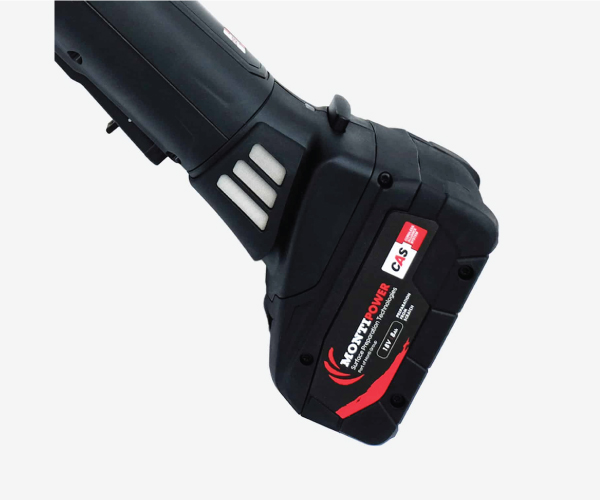
The Bristle Blaster® Ultimate Cordless provides the same surface preparation performance as the electric version, with the added benefit of mobility and flexibility for use in confined or elevated locations. The cordless system includes a safety switch, anti-vibration handle, and adjustable accelerator bar for working on difficult-to-reach areas.
It is part of the Cordless Alliance System (CAS). This allows battery pack and charger compatibility between different manufacturers. The 18 V/8.0 Ah battery provides about 25 minutes of continuous operation per charge, preparing around 0.5 m² of surface. A rotation speed of 2,200 rpm for single-belt operation ensures consistent anchor profiles and efficient cleaning in field applications.
Bristle Blaster® Pneumatic
Atex-Approved Pneumatic Tool in Hazardous Areas.
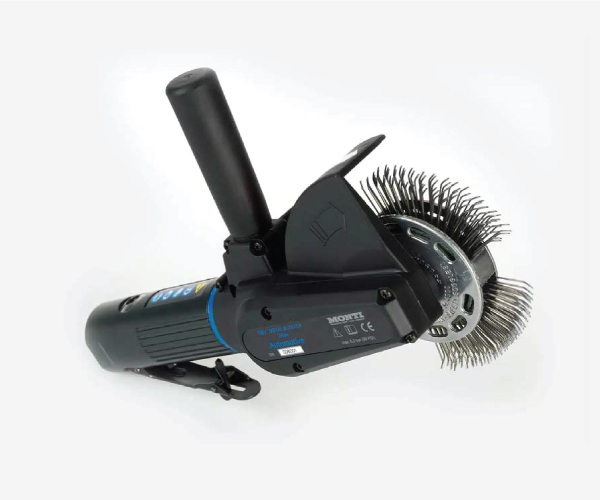
The Bristle Blaster® Pneumatic is an ATEX-approved tool for hazardous and dust-sensitive environments. It removes corrosion, mill scale, and coatings without damaging the underlying substrate. The pneumatic drive provides reliable performance in industrial applications. It creates anchor profiles between 65 to 85 µm Rz on various surfaces, including welds, bolts, and irregular geometries.
The tool restores corroded surfaces to near-white or white metal conditions while enhancing fatigue resistance through compressive residual stress. It uses long-lasting Bristle Blaster® Belts and includes Dustcontrol compatibility to maintain clean working conditions. This makes it a safe and efficient alternative to abrasive blasting systems.
MBX® Electric Variomatic
Electric Tool for Rust, Paint, and Coating Removal without Substrate Damage.
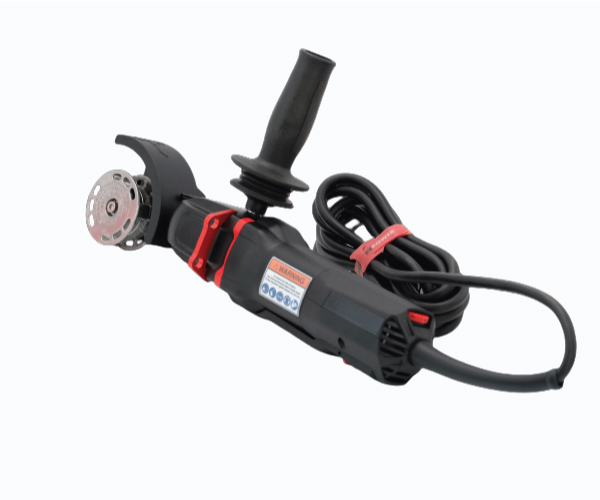
The MBX Electric Variomatic removes rust, paint, underseal, sealants, and adhesives quickly and precisely. Its flexible-wire belts rotate in a patented housing, working on a cushion of air to remove contaminants without damaging the base material. The tool works effectively on hard and soft surfaces, adapting to irregular shapes and tight areas.
It creates a uniform surface without grinding or material loss and avoids clogging or gumming of the bristles. The MBX® system removes corrosion and coatings efficiently in automotive, marine, and industrial repair applications for a clean and profiled substrate ready for coating.
MBX® Pneumatic
Air-Driven Surface Preparation Tool for Efficient Cleaning In Industrial Environments
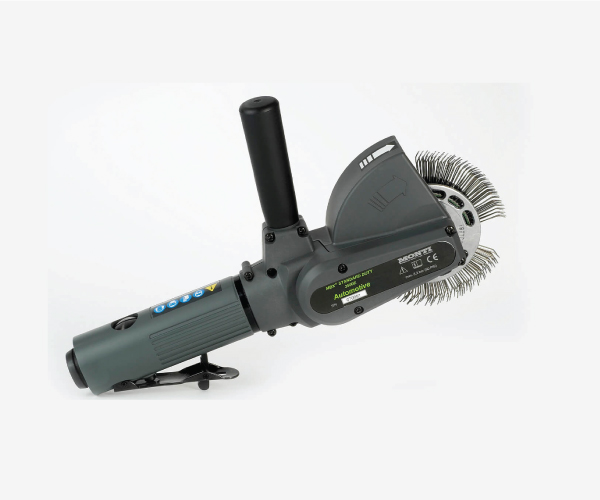
The MBX® Pneumatic version offers the same surface preparation performance using an air-driven motor. It works well where electric tools are unsuitable. This tool removes corrosion, oxidation, paint layers, sealants, and coatings, even on uneven or confined surfaces.
Flexible-wire belts rotate on an air cushion. This provides safe, lasting performance and full visibility of the working area. The pneumatic drive allows extended operation and is well-suited for maintenance in shipyards, refineries, and fabrication facilities where compressed air supply is available.
B. Polymer Coating Solution
Polymer Coating for Extreme Industrial Applications
Industrial operations in cement, power generation, metal smelting, and recycling face harsh exposure to heat, corrosive gases, and abrasive dust. These conditions speed up surface degradation, leading to premature equipment failure, more frequent maintenance, and expensive production downtime.
Conventional coatings often fail under high-temperature or chemical exposure, leaving critical assets vulnerable to corrosion and wear. PT Suprabakti Mandiri partners with Polylloy Coatings to address these challenges by delivering advanced Polymer Coating Solutions designed for extreme industrial environments.
Polylloy's specialized coating systems extend process equipment life, prevent unplanned shutdowns, and lower total operating costs by maintaining consistent protection in the most demanding conditions. The Polylloy product family, CorrosionGard™, KilnGard™, FlueGard™, WearGard™, and StackGard™, is engineered to perform where conventional coatings fail.
Each formulation offers high chemical stability, thermal durability, and mechanical strength. They ensure long-term protection for metal and concrete surfaces exposed to corrosive and high-temperature processes.
FlueGard™
High-Temperature Coating for Corrosion Protection in Flue Gas and Exhaust Systems
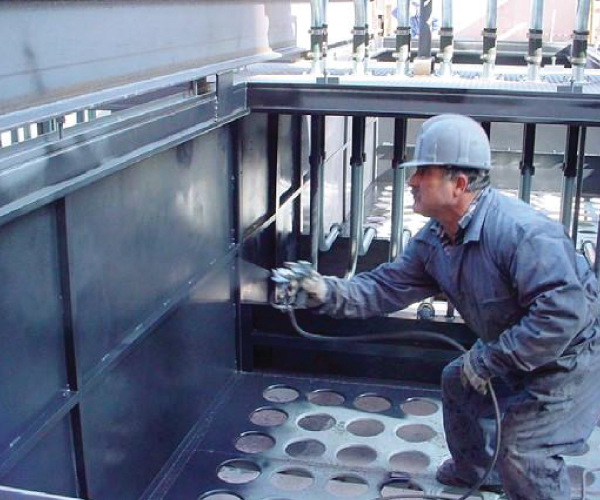
FlueGard™ coatings protect the internal surfaces of ducts, stacks, electrostatic precipitators, and flue gas desulfurization (FGD) scrubbers. These components are exposed to acidic and high-temperature exhaust streams. FlueGard®-225SQC, the latest formulation, offers exceptional resistance to corrosive gases such as SO₂, SO₃, HCl, and NOx, commonly found in cement plants, smelters, and power plants.
This two-component polymeric alloy provides superior protection at temperatures up to 225°C, combining corrosion, abrasion, and impact resistance with strong adhesion to both carbon and stainless steel substrates. Once applied and cured, it forms a seamless, thermoset coating that will not delaminate under temperature fluctuations. FlueGard™ coatings cure using process heat during plant startup for a reliable, long-term solution for high-temperature corrosion control.
KilnGard™
Advanced Thermal Barrier Coating for Kiln Shell Corrosion and Heat Protection
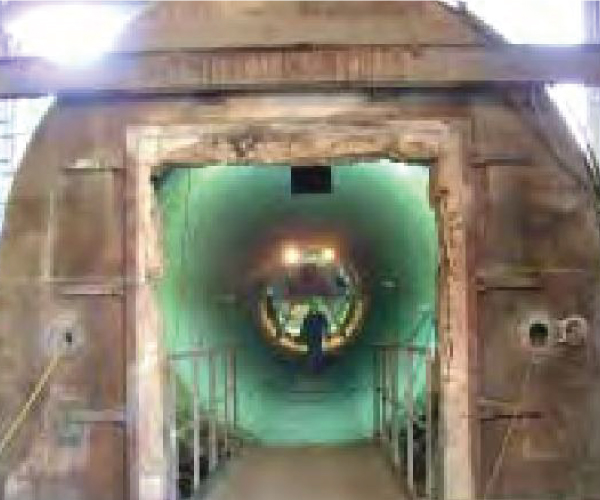
KilnGard™ is specifically engineered to withstand extreme temperatures and corrosive conditions found in cement and lime kilns. Modern operations using alternative fuels experience increased alkali and acid attack on kiln shells, especially beneath refractory linings. KilnGard™ creates a durable barrier that prevents steel corrosion in these aggressive environments, maintaining structural integrity and extending the service life of kiln shells.
The system operates effectively at temperatures up to 600°C, resisting corrosion, abrasion, and impact from hot flue gases and particulate matter. Applied as a dual-component coating by spray, roller, or brush, KilnGard™ cures initially at room temperature and is finalized through heat curing during kiln startup. The dense ceramic-like finish ensures high adhesion and mechanical stability under severe thermal cycling.
StackGard™
Acid and Heat Resistant Coating for Chimneys, Ducts, and Exhaust Stacks
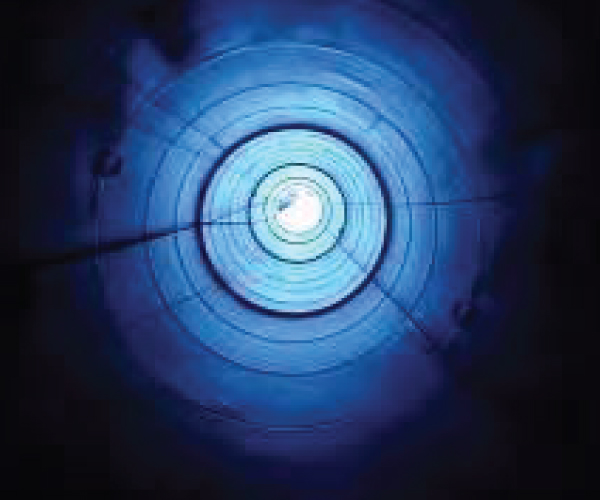
StackGard™ protects chimneys, vertical ducts, and fans operating under acidic condensation and elevated temperatures. Industrial flue gases containing sulfur and chlorine compounds can rapidly corrode steel surfaces, resulting in structural weakening and potential leakage. StackGard™-255SQW shields these components, maintaining coating integrity through continuous thermal and chemical stress.
StackGard withstands temperatures up to 255°C. It forms a dense, impermeable film that resists acid attack, abrasion, and salt corrosion. It adheres strongly to properly prepared metal surfaces, preventing delamination and cracking. The coating is applied as a two-component system and cured through exposure to operational heat, ensuring a durable, long-lasting barrier that protects critical exhaust systems in power generation, waste incineration, and refining operations.
WearGard™
Ceramic-Reinforced Coating for Abrasion and Erosion Resistance in High-Wear Areas
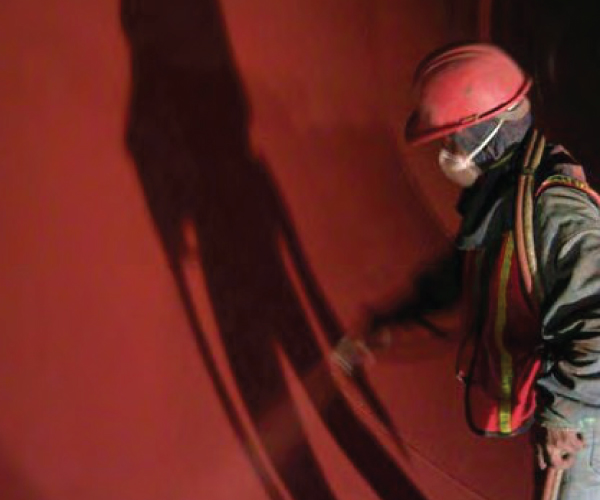
WearGard™ is formulated to combat severe abrasion and erosion in high-wear process areas such as chutes, ducts, and hoppers. In cement, lime, and power plants, where flue gases and particulate matter cause mechanical wear in addition to corrosion, WearGard™ provides dual protection against both forms of surface damage.
Operating effectively at temperatures up to 625°C, WearGard™ creates a tough, ceramic-like coating that adheres tightly to steel surfaces and withstands the impact of high-velocity particulate flow. Its excellent chemical and heat resistance ensures reliability even under prolonged exposure to aggressive environments. Easy to apply and inspect, WearGard™ extends equipment life, reduces replacement frequency, and maintains process efficiency in heavy-duty industrial applications.
CorrosionGard™
Polymer Coating for Chemical and Moisture Protection on Steel and Concrete
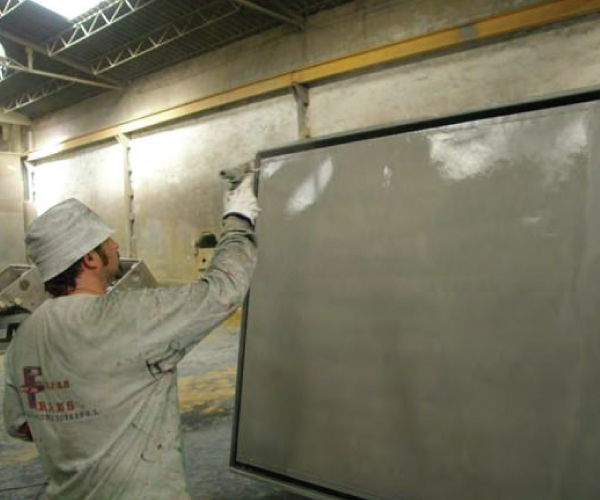
CorrosionGard™ is a versatile polymer coating developed to protect steel and concrete structures from severe chemical and moisture exposure. It is widely applied across cement plants, refineries, power generation facilities, and metal smelters where steel surfaces are prone to oxidation and chemical attack. The coating bonds tightly to prepared steel, maintaining adhesion even when exposed to airborne contaminants that typically cause blistering or delamination.
With excellent resistance to acids, alkalis, and salt corrosion, CorrosionGard™ provides reliable performance in both marine and industrial settings at operating temperatures up to 160°C. It is a two-component, zero-VOC formulation that can be applied by spray, roller, or brush. Once cured at room temperature, it forms a tough, impervious layer that isolates the substrate from chemical intrusion, ensuring long-term surface integrity and reducing maintenance cycles.
Flake Lining Solution
Glass Flake Resin Based Corrosion Protection Systems
Corrosion in high-temperature and chemically aggressive environments, such as flue gas systems, scrubbers, chimneys, and process vessels, poses a major challenge to plant reliability and operating efficiency. Continuous exposure to acids, heat, and moisture can rapidly deteriorate metal surfaces, leading to costly maintenance and unplanned shutdowns.
PT Suprabakti Mandiri offers a comprehensive resin-based protection approach through Flake Lining Systems from REMA TIP TOP, engineered to deliver long-term resistance against chemical and thermal attack.
These advanced coatings combine polyester, vinyl ester, epoxy, and phenolic resins with C-glass, mineral, or graphite flakes to create a dense, multi-layered barrier that blocks permeation and corrosion. Available in sprayed, trowelled, or laminate applications, each system is tailored to suit the operating environment and substrate conditions.
From flue gas ducts and scrubbers to process tanks and chimneys, Suprabakti’s flake lining solutions ensure lasting protection, extended service life, and reliable performance under the harshest operating conditions.
Coroflake Trowelled Lining
High-Performance Glass-Flake Lining for Immersion and Chemical Resistance
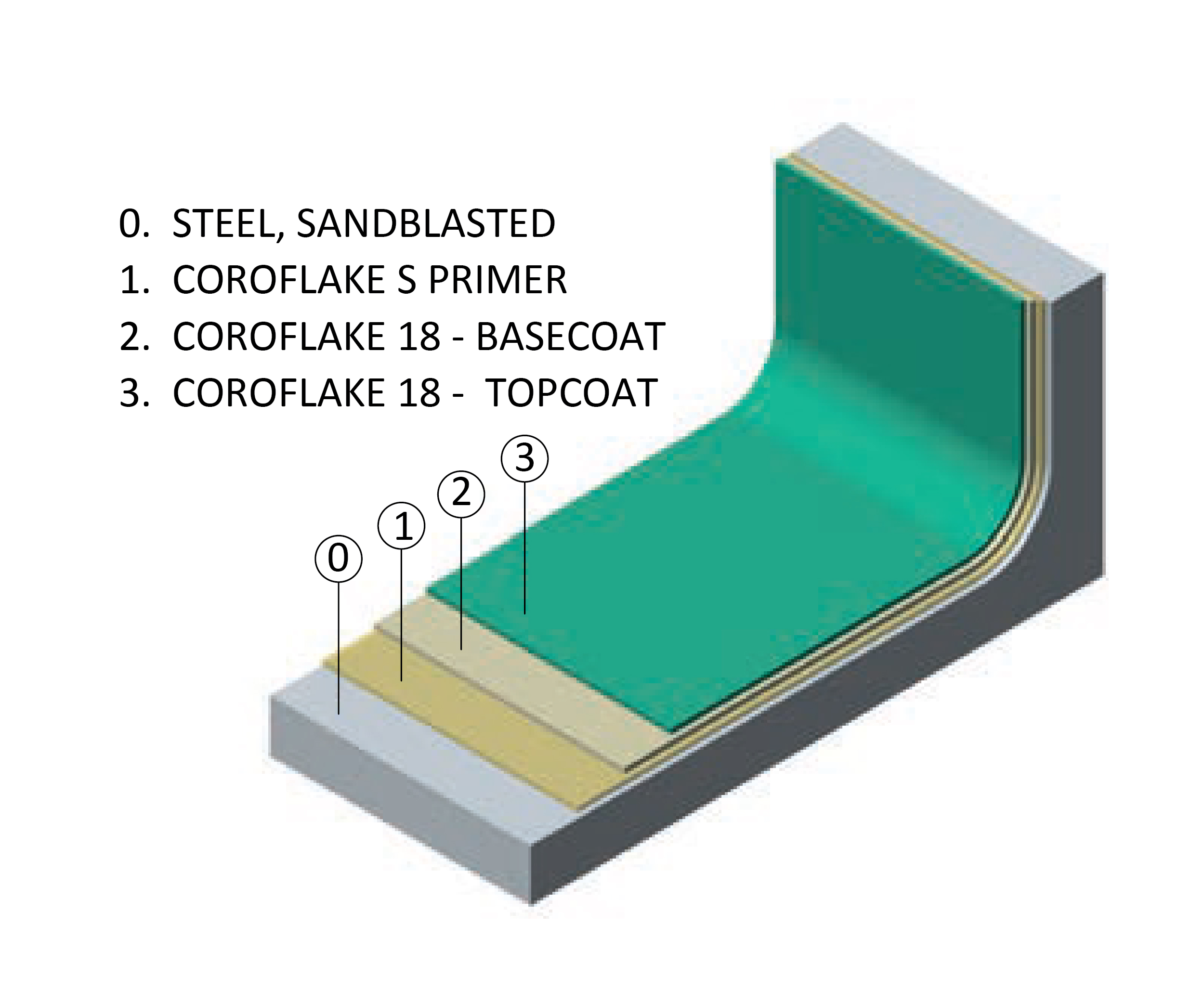
The Coroflake Trowelled Lining system protects metallic components exposed to aggressive media under continuous immersion. Based on polyester and vinyl ester resins and reinforced with micro-thin C-glass flakes, this system delivers exceptional chemical and permeation resistance.
The parallel alignment of the glass flakes creates an effective barrier that minimizes diffusion and enhances durability. Applied in just two layers, achieving a nominal thickness of approximately 2.0 mm, Coroflake trowelled linings are suitable for service temperatures up to 90°C. Typical applications include tanks, scrubbers, reactors, and process vessels in chemical and industrial plants.
Coroflake Spray Coating
Spray-Applied Multi-Flake Coating for Fast and Reliable Corrosion Protection
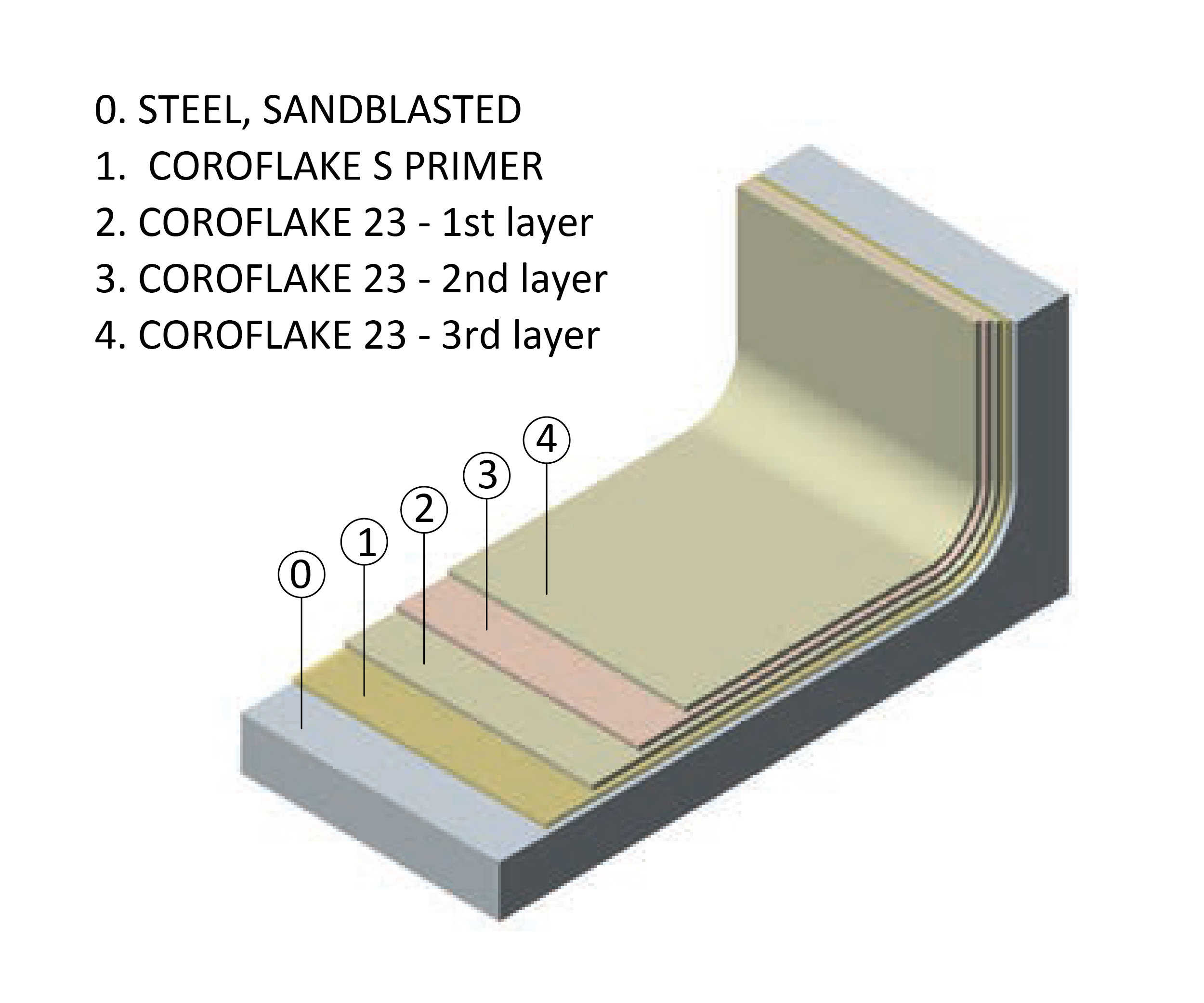
The Coroflake Spray Coating system combines the superior chemical resistance of trowelled linings with the speed and efficiency of airless spray application. Formulated with vinyl ester, epoxy-novolac, and polyester resins, reinforced by C-glass, mineral, or graphite flakes, it forms a tightly packed multi-flake barrier about 100 flakes per millimeter of coating.
Depending on the exposure, two or more layers are applied to achieve a total thickness of 1.0 to 2.5 mm, offering long-term and economical protection for process equipment. The system performs reliably at temperatures up to 230°C under dry conditions, making it ideal for flue gas ducts, chimneys, scrubbers, and process containers where both thermal and chemical resistance are critical.
Topline Lining System
Glass Mat-Reinforced Lining for Impact, Abrasion, and Corrosion Resistance
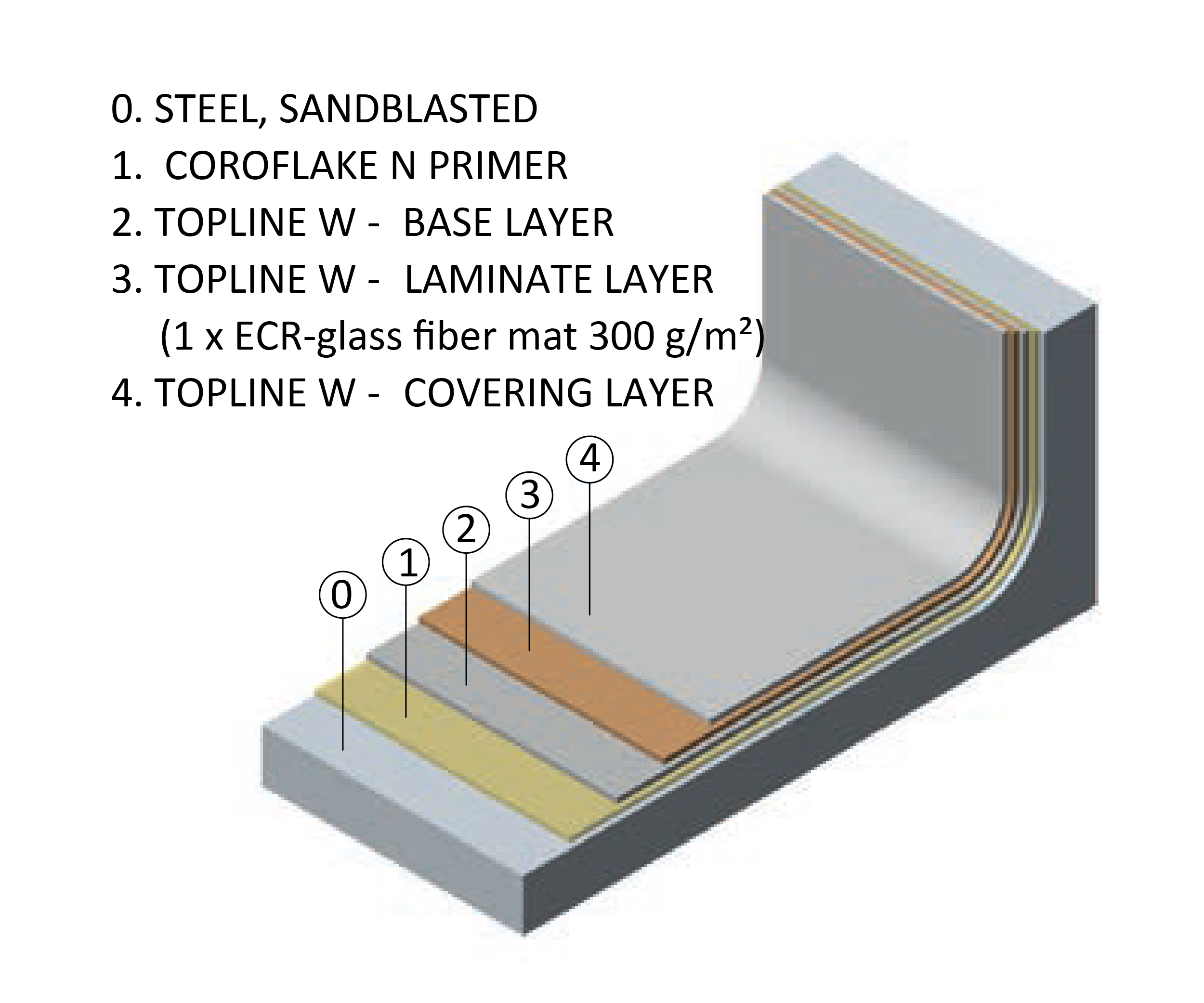
The Topline Lining System is a glass mat-reinforced coating designed for environments requiring exceptional impact and abrasion resistance alongside corrosion protection. Built with polyester, vinyl ester, epoxy, or epoxy-novolac resins, this system forms a 3–4 mm thick reinforced layer with excellent mechanical strength and chemical durability.
Topline coatings can also be formulated for electrical conductivity where needed. Their non-slip, non-porous surfaces require no additional sealing, ensuring a clean, maintenance-friendly finish. Operating effectively in wet environments up to 75°C, these coatings are used across high-wear industrial areas, as well as food and pharmaceutical facilities where durability and hygiene are equally important.