
Crushing
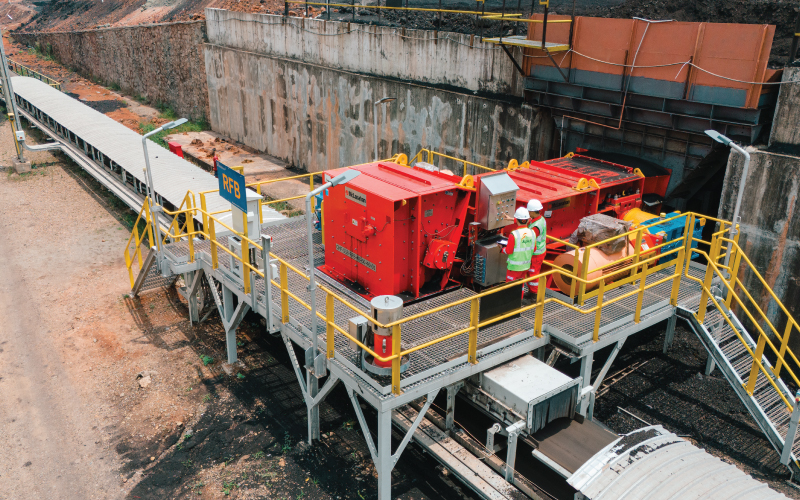
In mineral processing or metallurgy, crushing is an initial step in producing rock coal, and other materials. The raw materials extracted from mines often include large boulders that cannot pass through the processing plant without size reduction. The type of crusher needed depends on the specific material being processed.
During the crushing stage, ore or rock from the mining site is fed into mechanical equipment to reduce its mass and size, facilitating further processing and separating valuable minerals from waste material.
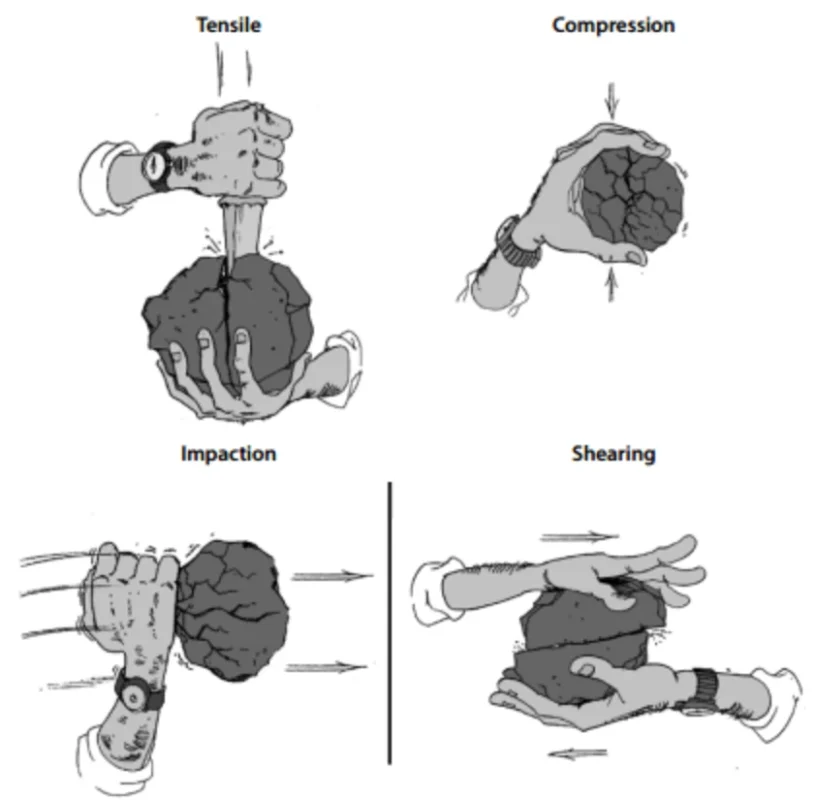
The method of crushing rocks varies depending on the type of rock. For hard and abrasive rocks, compression crushing is applied, placing the material between highly wear-resistant surfaces. Softer and less abrasive rocks, on the other hand, are crushed with impact, shear, and compressive mechanisms generated by rock crushers.
McLanahan’s Crushing Solutions by Suprabakti
To support crushing in the mineral processing industry, Suprabakti supplies products from McLanahan, a global leader in process solutions. McLanahan Corporation serves a wide range of industries, including mineral processing, aggregate processing, agriculture, and more.
McLanahan specializes in a variety of crushing solutions for different types of minerals. These solutions handle everything from soft minerals like coal and salt to hard rocks like granite and ore-bearing minerals such as copper and iron. Their equipment uses compression, impact, attrition, or shear forces to reduce materials at the primary, secondary, and tertiary stages.
Compression Crushing
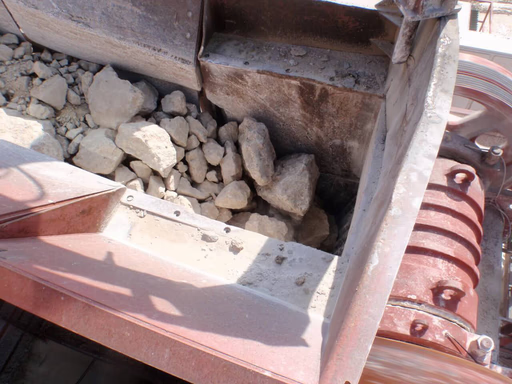
Crushers that use compression forces work by squeezing the material between two surfaces: one stationary and one mobile. As the material moves downward through the chamber, it gets crushed between the moving steel piece and the fixed plate.
Material that has attained the desired size progresses to the subsequent stage, while larger material undergoes repeated pressure in the chamber until it achieves the desired size. The gradation is controlled by modifying the gap between the stationary and moving plates at their nearest point.
Compression crushers are versatile machines suitable for primary, secondary, or tertiary crushing stages, depending on the application. This type of crusher excels in processing hard, tough, and abrasive materials that are non-sticky.
Cone Crushers are compression machines that reduce material by squeezing it between a moving and stationary piece of steel.
DDC-Sizers, or Direct Drive Crushing Sizers, offer primary, secondary, and tertiary reduction for friable, low silica materials.
Feeder-Breakers use a horizontal crushing roll and chain-and-flight drag conveyor to handle various run-of-mine minerals.
Jaw Crushers compress material between a moving and stationary piece of steel.
Roll Crushers feature built-in tramp relief for uninterrupted operation, even when encountering uncrushable materials.
Sampling/Pilot Plant Crushers are designed for applications needing lower feed rates while maintaining the durability and robustness of larger crushers.
Impact Crushing
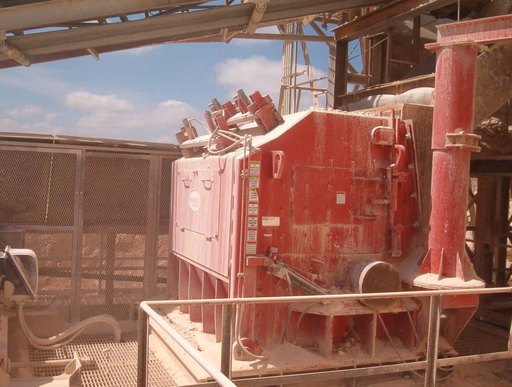
Impact crushing operates on the principle of mass versus velocity, utilizing two methods. In the first, material collides with hammers fixed to a spinning rotor, initially breaking upon impact and further reduced by collision with breaker plates. Moreover, inter-particle collisions and particle-on-particle attrition contribute to material breakdown.
The other method involves the material being thrown at high speed against a solid anvil, breaking the material along its natural fissure lines. The particle size is regulated by the speed and distance of material projection.
In both forms of impact crushing, material meeting the desired size falls through the chamber, while larger pieces undergo a continued impact process. This method accommodates both hard rock and softer materials for size reduction.
Hammermill Crushers offer high reduction ratios across various materials, catering to both aggregate and industrial sectors.
Impact Crushers – Primary achieve material reduction through a sudden impact force, causing it to shatter along weak fissures.
Impact Crushers – Secondary, like the Andreas-style impactor, feature disc rotors, reversible hammers, common wear liners, and a hydraulic hood for accessibility.
Rotary Breakers efficiently reduce size and scalp undesirable materials in a single operation.
Sampling/Pilot Plant Crushers are designed for applications needing lower feed rates while maintaining the durability and robustness of larger crushers.
Shear Crushing
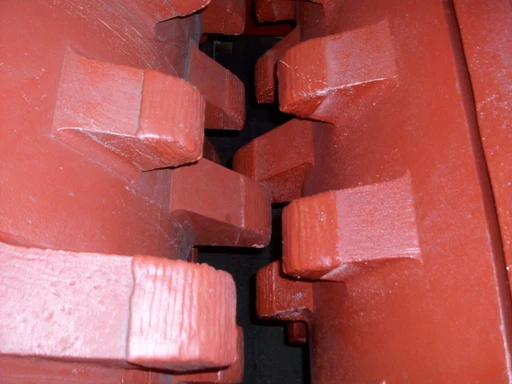
Shear crushers achieve size reduction by trimming or cleaving material using shear forces. Material caught between a solid plate and a rotating roll gets shorn by the teeth on the roll upon contact. This method is often combined with compression, attrition, and impact techniques for thorough mineral size reduction.
Shear crushing is particularly suited for processing friable material or producing coarse products during primary crushing.
Roll Crushers feature built-in tramp relief for uninterrupted operation, even when encountering uncrushable materials.
Sampling/Pilot Plant Crushers are designed for applications needing lower feed rates while maintaining the durability and robustness of larger crushers.
Attrition Crushing
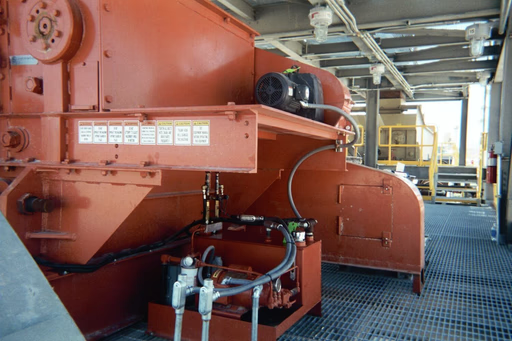
Attrition crushers utilize a grinding action to reduce feed material, applying the principles of mass and velocity. Material is scrubbed between two hard surfaces to achieve the desired size and shape. Reduction occurs through particle-to-particle contact or contact with a rigid face.
Attrition crushers, known for their high reduction ratios, are most effective with friable and less abrasive materials.
Cone Crushers are compression machines that reduce material by squeezing it between a moving and stationary piece of steel.
Hammermill Crushers offer high reduction ratios across various materials, catering to both aggregate and industrial sectors.
Sampling/Pilot Plant Crushers are designed for applications needing lower feed rates while maintaining the durability and robustness of larger crushers.