Belt Winder
Re-winding the belt onto the reel presents a common challenge in conveyor belt change-out. While manual belt winding suffices for shorter belts, larger reels pose safety risks and operational inefficiencies. Manual belt winding not only strains labor but also risks uneven reeling, heightening the potential for hazardous inverted belts and severe accidents.
Manual belt winding using a loader is frequently associated with safety risks, time inefficiencies, and labor-intensive processes. The old belt is spliced with a new belt and then pulled out of the conveyor system. Afterward, the old belt is stored in a large enough place until further disposal plans.
This obsolete method of replacement poses numerous drawbacks, underscoring the need for innovative solutions. Therefore, this issue can be overcome by using a belt winder (which is rented, and sold) by Suprabakti.
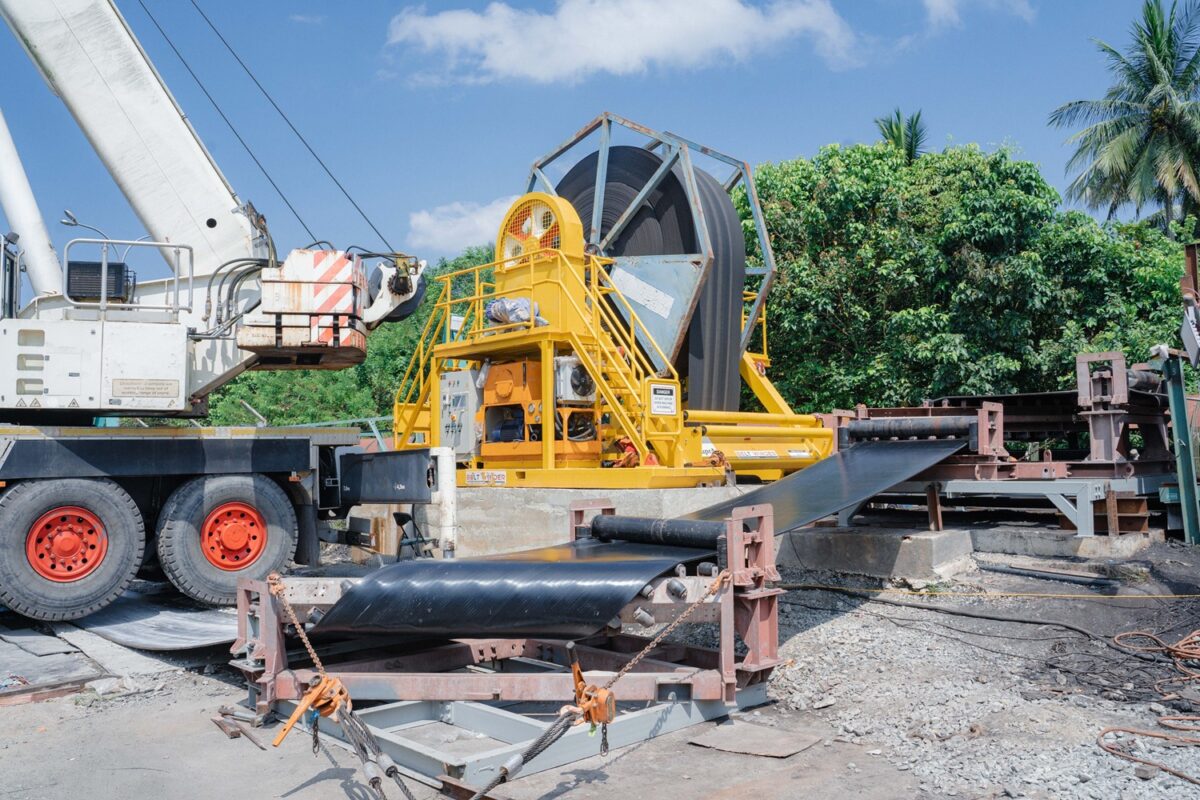
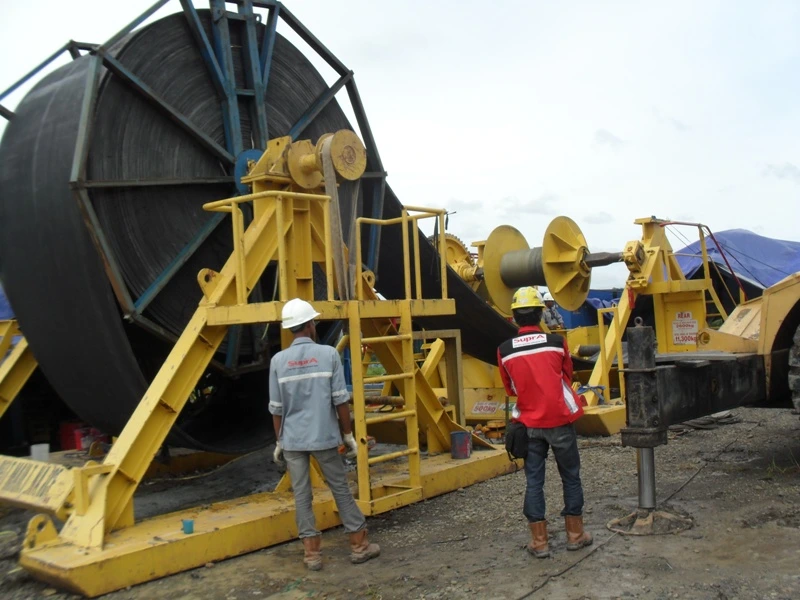
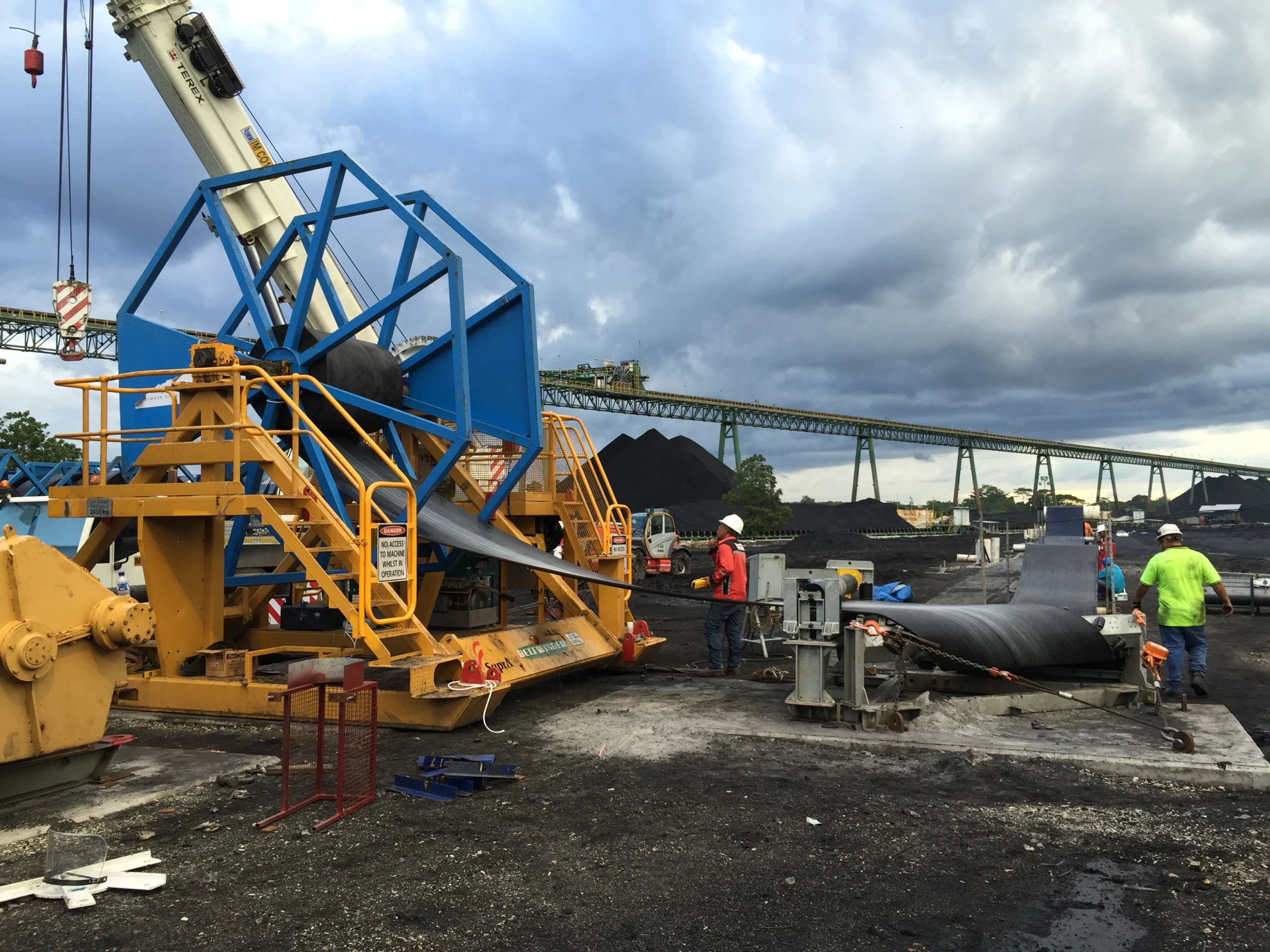
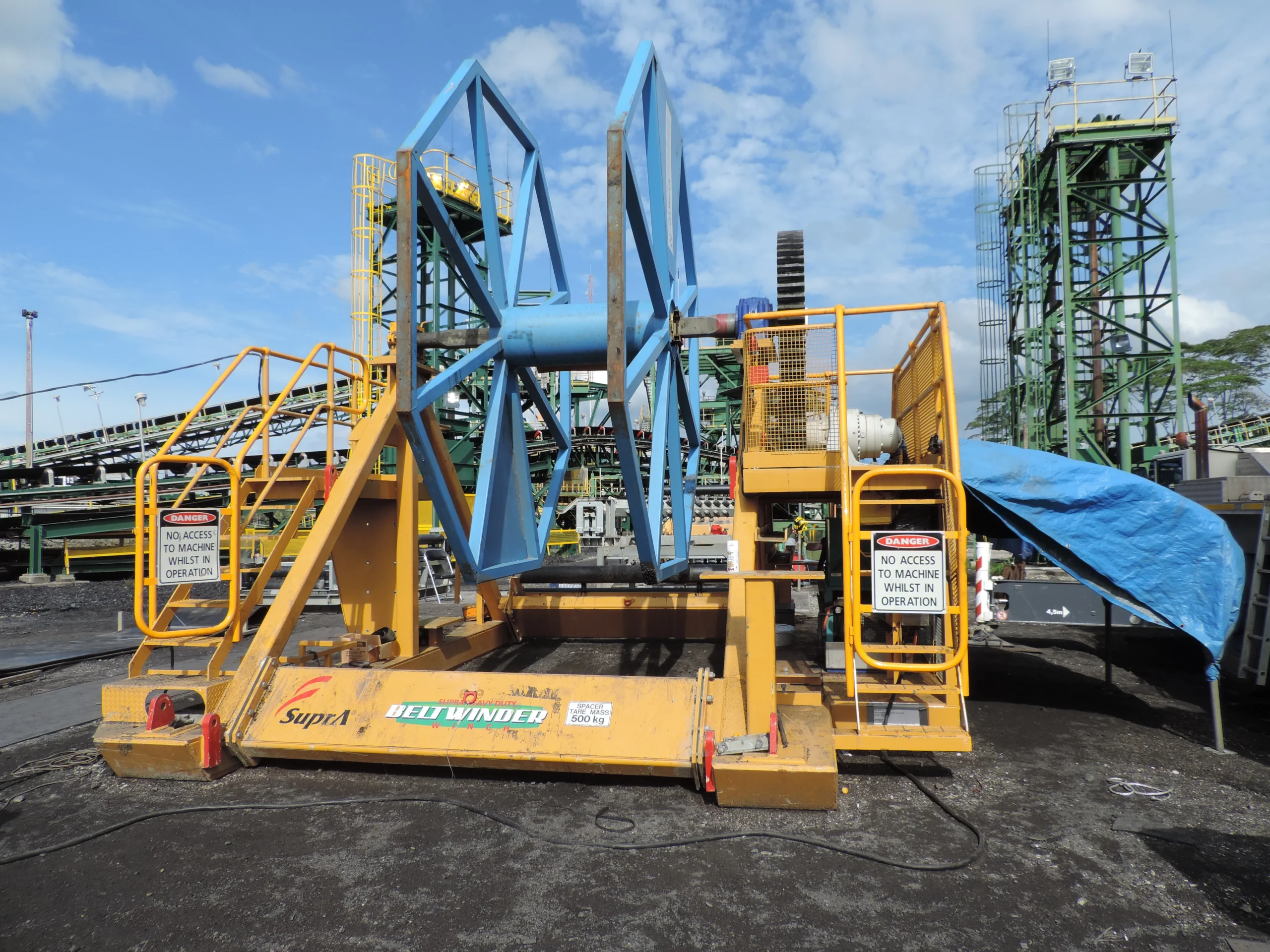
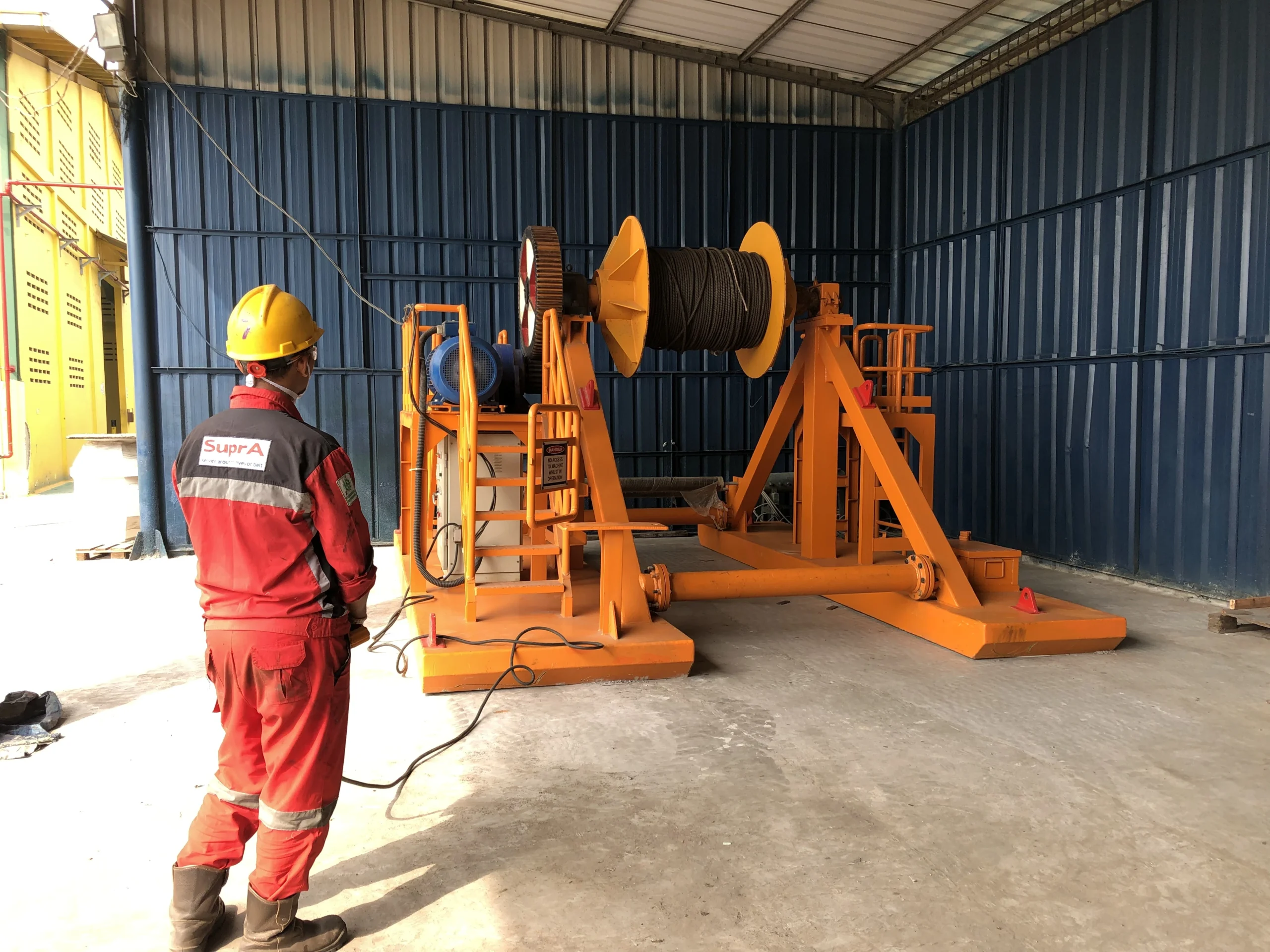
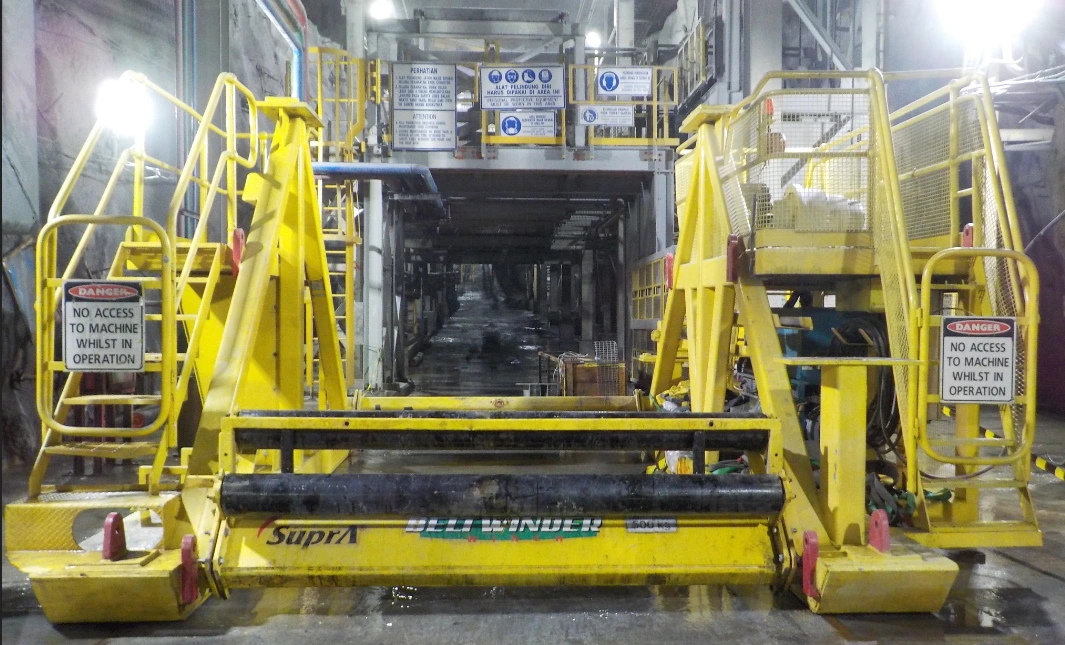
Belt winder simplifies belt handling when installing or removing belts from a conveyor system. Suprabakti manufacture the Supra Belt Winder for belt pulling/belt change-out purposes. The utilization of belt winders is certainly safer, more effective, and faster.
The Supra Belt Winder offers customizable options to meet specific requirements. Operated with a control box or a 5-meter-long hand remote control, it ensures flexibility and ease of operation. Available in assembled or unassembled adjustments, it can be conveniently transported in a standard pickup truck, enhancing accessibility and efficiency for customers’ needs.
Our belt winder features a hydraulic motor-driven planetary gearbox, distinguishing it from conventional chain-driven belt reelers. In chain-driven systems, conventional electric motors have limitations in performing tasks such as winding the belt.
As the diameter of the belt reel increases, it can lead to a loss of pulling power and potential stalling. Moreover, lack of operator feedback on loads and forces poses risks of equipment overstressing and instability, especially if the frame is not properly anchored.
Supra Belt Winder is designed to perform the following tasks:
- Belt change out: Pulls new belts into the system while reeling out old ones, capable of rotating the system.
- New belt installation: Facilitates seamless installation of new belts.
- Reeling old belts: Reel old belts onto the ground into a neat belt reel.
- Making large belt reels: Enables splicing of two rolls of belt and reels them up into one consolidated reel.
The conventional chain-driven electrical motor chain driven has limitations to perform the above tasks. When the diameter of the belt reel gets larger, the chain-driven belt reeler will lose the pulling power and become stalled, also the operator does not indicate what loads and forces he has on the winder at any given time which also poses a risk with possible over stressing of equipment and even stability of the belt reeler frame itself if no properly anchored.
Key Safety Features:
The winder has safety features like startup alarms, lights, and pressure/torque controls. These prevent over-tensioning and stress on the belt or system by stalling at preset forces if jams occur, while also ensuring essential components remain in place during operation.
Operators benefit from real-time pressure and torque readings, providing insight into the force exerted during belt reeling. The power unit, gearbox, hydraulic motor, and electrical control unit are made by our certified engineers.
Belt Stand
Suprabakti manufactures Belt Stands specifically made for the efficient storage of rolled-up conveyor belts. Our medium and heavy-duty stands guarantee safe handling of conveyor belts, with the heavy-duty variant capable of accommodating belts up to 90 tons and 2,200mm wide. Manufactured with a focus on durability, these belt stands are specifically made for easy and secure storage, hence increasing the lifespan of conveyor belts.
Our belt stand features a solid pontoon base to provide stability during the belt winding process, enhancing operational safety. The standard belt stand comes with a hook for anchoring. It operates on a fail-safe principle, providing additional safety measures for both operators and equipment alike.